
The sweeping battlefields, desert arenas, and golden wheat fields of Gladiator look as though they belong to one ancient world. But where was Gladiator filmed? Ridley Scott's 2000 epic was actually filmed across five countries: England, Morocco, Malta, Italy, and the United States.
The opening battle took place in an English forest, ancient Rome was recreated in Malta, and the famous wheat fields of Elysium were filmed in Tuscany. I visited those Tuscan fields myself, although finding the exact spot was trickier than expected!
From the deserts of Morocco to the mountains of California, let's explore where Gladiator was filmed, which scenes were shot at each location, and which places you can still visit today.
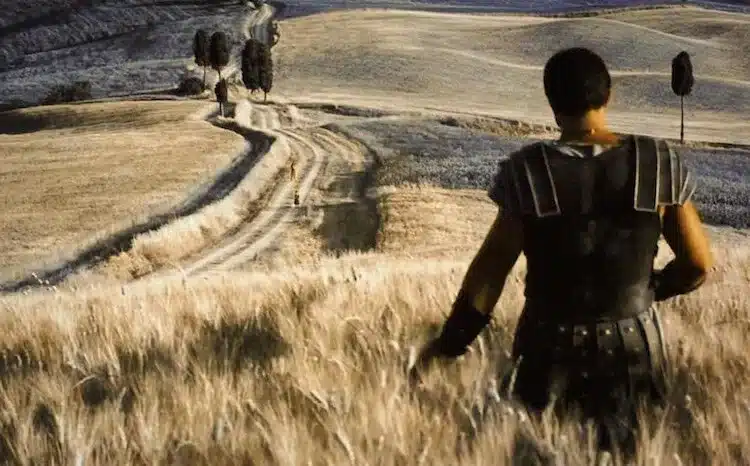
Gladiator Filming Locations At a Glance
The most recognisable scenes in Gladiator were filmed in England, Morocco, Malta, Italy, and the United States.
Was Gladiator filmed in Rome? Surprisingly, no. The production recreated much of ancient Rome at Fort Ricasoli in Malta, including a large partial replica of the Colosseum. The imposing arena you see in the film combines physical sets with visual effects.
The filming locations aren't equally accessible. Some are public landscapes you can explore, while others are private properties, working film sites, or places where the original sets no longer exist.
SUMMARIZE & SAVE THIS CONTENT ON
Jump to:
- Gladiator Filming Locations At a Glance
- Bourne Wood, England - The Opening Battle in Germania
- Ouarzazate and Aït Benhaddou, Morocco - Zucchabar and the Gladiator Arena
- Fort Ricasoli, Malta - Rome and the Colosseum
- Val d'Orcia, Tuscany - Maximus's Home and the Elysium Fields
- Alabama Hills, California - Maximus's Journey Home
- Behind the Scenes: Shepperton Studios, England
- Can You Visit the Gladiator Filming Locations?
- Gladiator Filming Locations FAQs
Bourne Wood, England - The Opening Battle in Germania
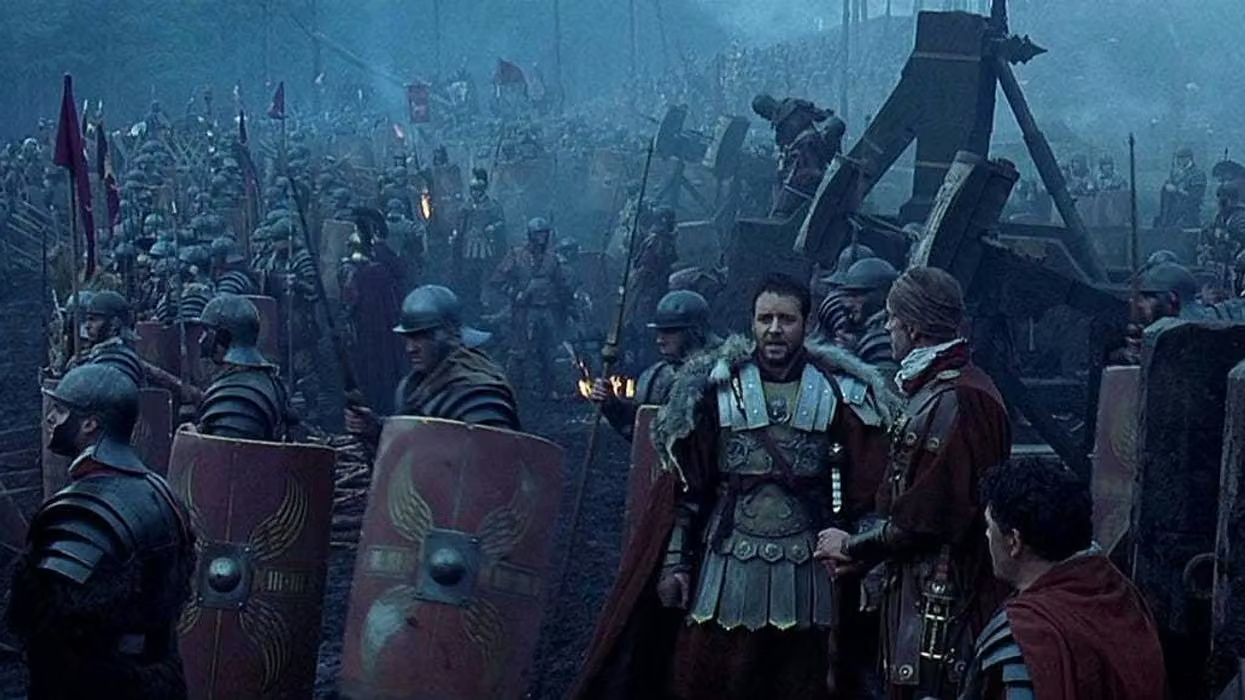
Remember the spectacular opening battle, where Maximus leads the Roman army against the Germanic tribes? Those scenes weren't filmed in Germany at all. They were shot in Bourne Wood, near Farnham in Surrey, England, in early 1999.
Interestingly, the production originally considered filming in Slovakia. However, director Ridley Scott was able to use a section of Bourne Wood that was already scheduled for forestry work and replanting. The woodland became the setting for one of the film's most memorable battle sequences, complete with Roman soldiers, flaming projectiles, and a rather chaotic battlefield.
Can You Visit Bourne Wood?
Yes! Bourne Wood is open to the public, with walking paths through its pine forests and scenic views across a large heathland clearing. Don't expect to find the Roman encampment still standing, though. You're visiting the landscape where the battle was filmed rather than a preserved movie set.
The woodland is approximately 2 km south of Farnham, and paid parking is available. Use postcode GU10 2BH for directions, and check Forestry England's official website for current opening hours and parking information.
Ouarzazate and Aït Benhaddou, Morocco - Zucchabar and the Gladiator Arena
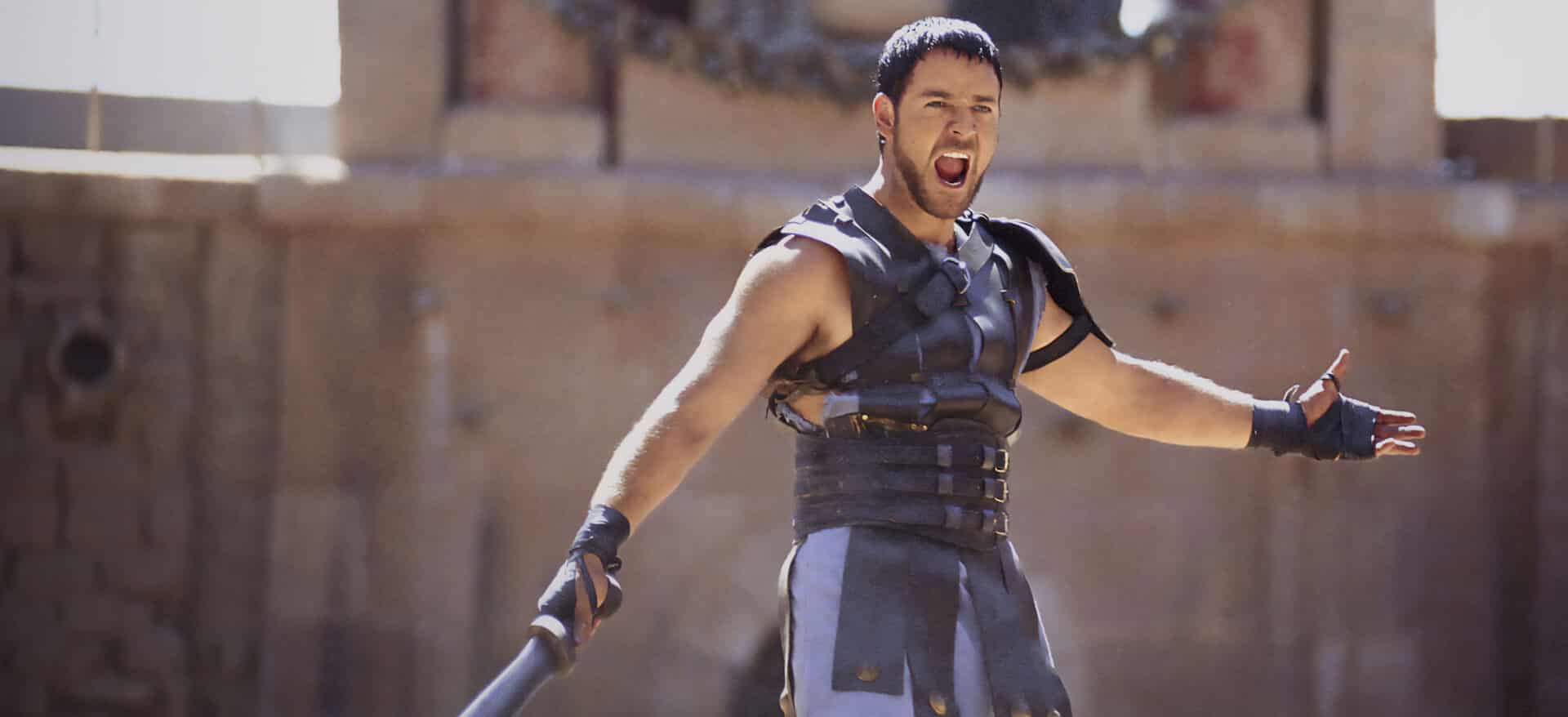
After Maximus is captured and sold into slavery, he finds himself fighting for survival in the dusty arenas of North Africa. These scenes were filmed around Ouarzazate and Aït Benhaddou, Morocco, near the Atlas Mountains.
The historic fortified village of Aït Benhaddou, a UNESCO World Heritage Site, helped bring the fictional city of Zucchabar to life. Its distinctive earthen buildings provided a convincing backdrop for the ancient world.
The production also constructed a temporary gladiator arena using thousands of locally made mud bricks. Additional scenes, including the slave-market and holding-area sequences, were filmed at nearby Atlas Studios.
Can You Visit the Gladiator Filming Locations in Morocco?
Yes! Aït Benhaddou is one of the more accessible Gladiator filming locations, and you can explore its historic streets and admire the mud-brick architecture that appeared in the movie.
Unfortunately, the gladiator arena was a temporary set and was dismantled after filming. However, the historic village remains, and you can also visit Atlas Studios in Ouarzazate to explore the region's filmmaking history.
Just don't expect every set on the studio tour to be an original Gladiator set. Access and displays can change depending on production activity.
For more information, see UNESCO's Aït Benhaddou listing and the Moroccan National Tourist Office's film-location guide.
Fort Ricasoli, Malta - Rome and the Colosseum
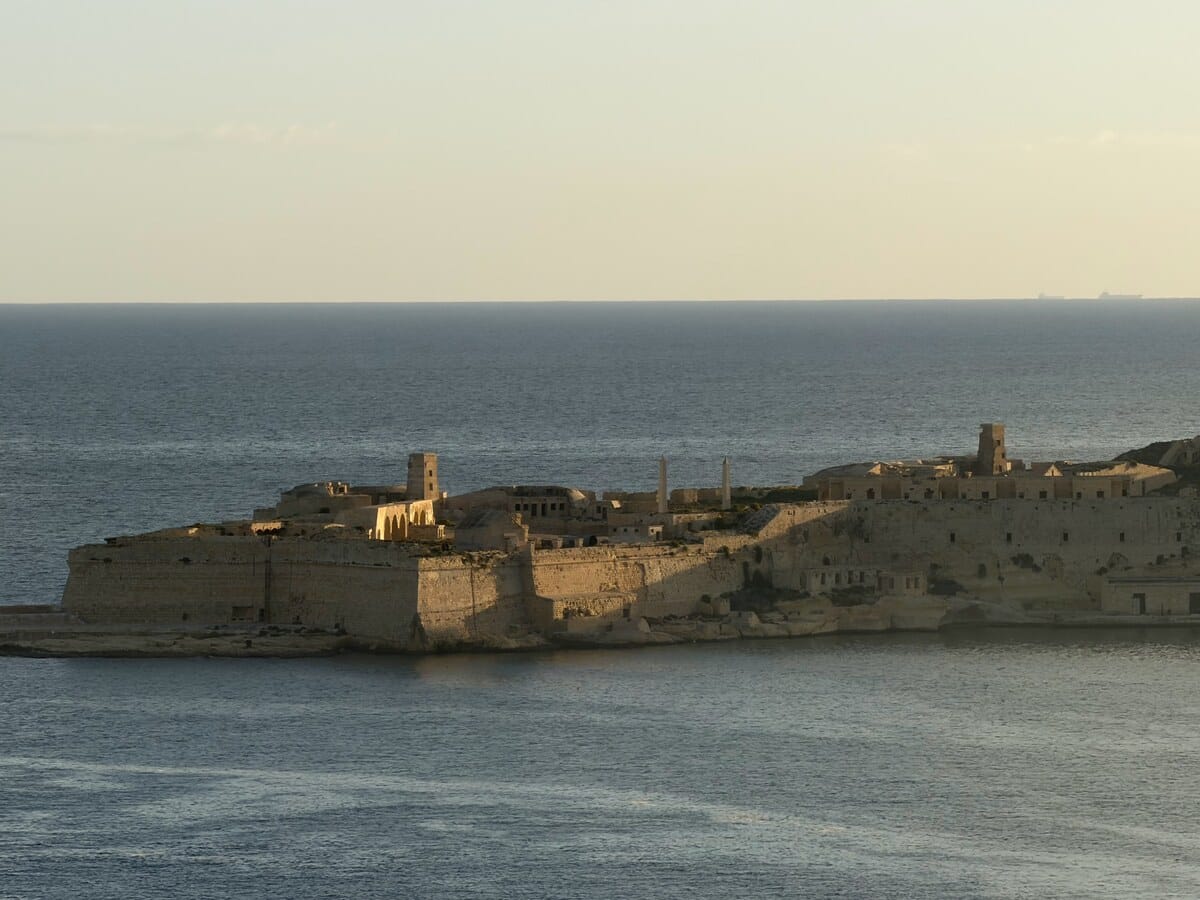
You might expect a film about ancient Rome to have been filmed in Rome itself. Surprisingly, Gladiator's Colosseum scenes were actually filmed at Fort Ricasoli in Malta, a 17th-century fortress overlooking the Grand Harbour.
The filmmakers constructed an enormous replica of the Colosseum inside the fort, building approximately one-third of its circumference to a height of 52 feet (16 metres). The remaining structure, including the upper tiers and thousands of cheering spectators, was added using computer-generated imagery.
Fort Ricasoli also housed elaborate sets depicting Rome's streets, markets, and imperial palace. In other words, much of the ancient city you see on screen was recreated in Malta!
It's the same cinematic trickery we discovered while researching Venice filming locations you can visit, where movies like Casino Royale and Spider-Man: Far From Home combine real landmarks with elaborate sets and visual effects.
Can You Visit Fort Ricasoli?
Unfortunately, Fort Ricasoli isn't generally open to tourists. It's still used for film productions, and the original Gladiator sets are no longer standing.
However, you can admire the fortress from across Malta's Grand Harbour or from a harbour cruise departing from Valletta. You won't get to explore Maximus's arena, but you can still see a historic fortress where Hollywood recreated ancient Rome.
Val d'Orcia, Tuscany - Maximus's Home and the Elysium Fields
Some of Gladiator's most emotional moments were filmed in the rolling hills of Val d'Orcia, Tuscany, near the towns of Pienza and San Quirico d'Orcia. Two locations were used for Maximus's home and his visions of the afterlife:
- Podere Poggio Manzuoli, near San Quirico d'Orcia: This farmhouse represented Maximus's home in Spain, including the heartbreaking scenes involving his family.
- Terrapille, near Pienza: The famous wheat fields where Maximus brushes his hand through the golden grain, imagining his return home. These landscapes also appear in the film's final moments.
Despite being filmed more than 25 years ago, the Tuscan countryside remains remarkably recognizable.
Of course, Gladiator isn't the only movie to make audiences fall in love with Tuscany. If you're interested in exploring more cinematic landscapes, we've also tracked down where Under the Tuscan Sun was filmed, including locations around Cortona and Montepulciano.
Can You Visit the Gladiator Filming Locations in Tuscany?
Yes, although finding the famous Elysium Fields isn't quite as straightforward as you might expect!
When I visited, conflicting Google Maps pins sent us down the wrong roads, and it took some local Italian TikToks (and my rusty Italian!) to finally find the right spot.
The landscape was just as beautiful as I'd imagined, although the golden wheat had given way to wild grasses. It's also worth remembering that this is working farmland, not a public film set.
If you're planning to visit, I've written a separate guide explaining how to find the Gladiator filming location in Tuscany, including what it looks like today, practical visiting advice, and the mistakes we made along the way.

Alabama Hills, California - Maximus's Journey Home
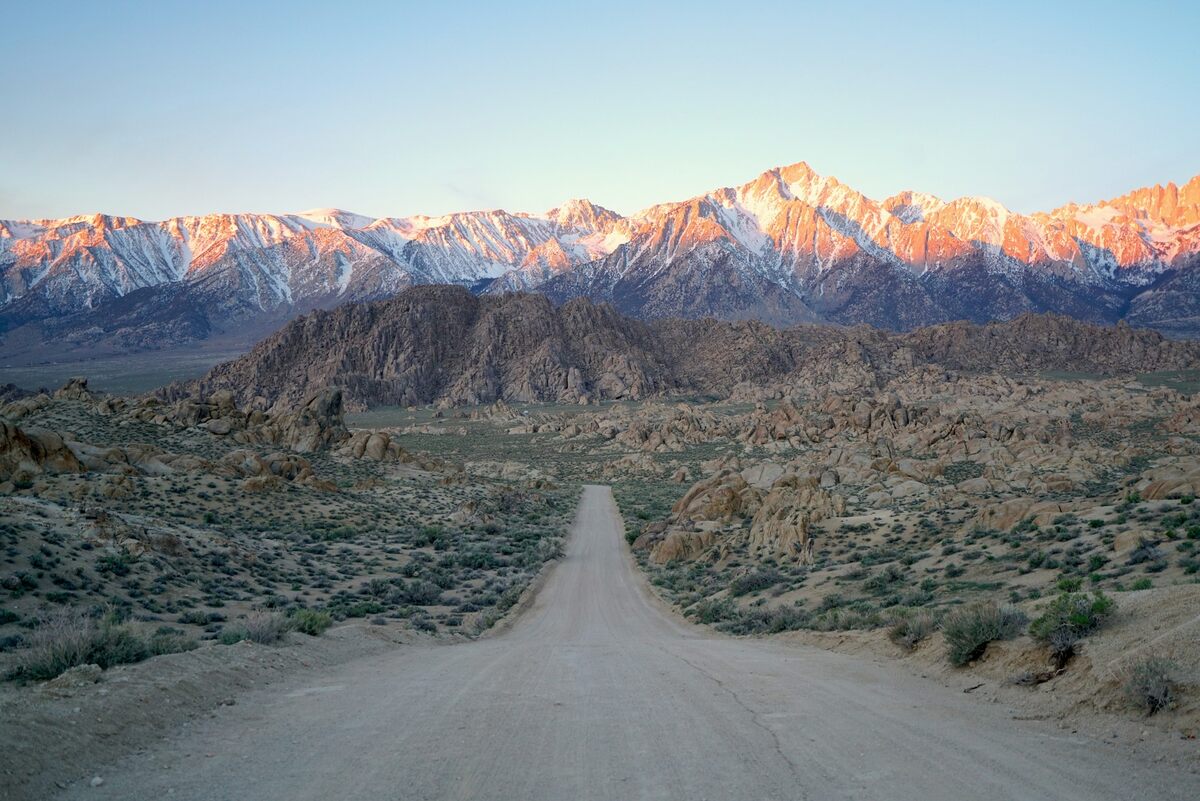
Believe it or not, parts of Maximus's desperate journey home to Spain were actually filmed in Alabama Hills, near Lone Pine, California.
Remember the scenes where Maximus races across the rugged landscape, hoping to reach his wife and son before the Roman soldiers? Those dramatic rocky hills and mountain backdrops belong to California's Eastern Sierra, not ancient Spain. (I know, I was shocked when I learnt too.)
The Alabama Hills have a long Hollywood history, appearing in hundreds of productions, including Iron Man, Django Unchained, and plenty of classic Westerns.
Can You Visit Alabama Hills?
Absolutely! Unlike some of the other Gladiator filming locations, Alabama Hills is a public recreation area managed by the US Bureau of Land Management.
You can explore its distinctive rock formations, hiking trails, and scenic viewpoints, with the Sierra Nevada mountains providing a spectacular backdrop.
Movie Road, just outside Lone Pine, is a good starting point for exploring the area's cinematic history. However, the exact spot used in Gladiator isn't clearly marked.
For directions and current visitor information, check the Bureau of Land Management's Alabama Hills guide.
Behind the Scenes: Shepperton Studios, England
Alongside its spectacular outdoor locations, Gladiator also involved production work at Shepperton Studios in Surrey, England.
One interesting detail is that the filmmakers built a miniature version of the Colosseum set at Shepperton to experiment with lighting and shadows before filming the enormous arena scenes in Malta.
Shepperton is a working film studio and isn't generally open to public tours, so this isn't somewhere you can explore as a Gladiator attraction.
Can You Visit the Gladiator Filming Locations?
Several of the real Gladiator filming locations are accessible to visitors, although some are considerably easier to explore than others.
| Filming location | Can you visit? | What you'll see today |
|---|---|---|
| Bourne Wood, England | Yes | The woodland and clearing used for the opening battle |
| Aït Benhaddou, Morocco | Yes | The historic fortified village, although the gladiator arena is gone |
| Fort Ricasoli, Malta | Restricted | The historic fortress from outside, but not the original Colosseum set |
| Val d'Orcia, Tuscany | Partially | The Elysium Fields landscape from public paths; Maximus's farmhouse is private |
| Alabama Hills, California | Yes | The rocky landscapes used in Maximus's journey home |
Which Gladiator Filming Location Is Most Worth Visiting?
If you're a Gladiator fan planning a trip, I'd recommend the Tuscan filming locations near Pienza.
Admittedly, I'm a little biased because they're the ones I've visited myself! But the rolling hills of Val d'Orcia are beautiful even without their Hollywood connection, and there's something rather special about recognizing the landscape from Maximus's final scenes.
If you'd like to turn that movie moment into part of a bigger holiday, our 7-day Tuscany road trip itinerary includes Pienza and the Gladiator filming location, alongside some of the region's most beautiful towns and countryside.
Morocco's Aït Benhaddou would also be a fascinating destination, particularly if you're interested in both film history and historic architecture.
Whichever location you choose, remember that you're generally visiting the real landscapes and buildings used during filming, rather than preserved movie sets. That's part of the experience, but it's worth knowing before you go.
Of course, Gladiator isn't the only movie that might inspire you to visit somewhere new. If you enjoy discovering destinations through film, check out our list of the best travel movies to inspire your next adventure for a little more cinematic wanderlust.
Gladiator Filming Locations FAQs
The film's major Roman scenes weren't shot at Rome's actual Colosseum. Instead, the production recreated ancient Rome at Fort Ricasoli in Malta, building a partial Colosseum set that was extended using computer-generated imagery.
The famous scene of Maximus running his hand through golden wheat was filmed near Terrapille, just outside Pienza in Tuscany's Val d'Orcia. The landscape is still recognizable today, although its appearance changes with the seasons.
Maximus's famous arena scene was filmed in Morocco, around Aït Benhaddou and Ouarzazate. The production constructed a temporary gladiator arena for the scenes set in the fictional North African city of Zucchabar.
Although Maximus's home is supposed to be in Roman Spain, the farmhouse and surrounding countryside were filmed in Tuscany, Italy. Scenes depicting his journey home also used the rugged Alabama Hills of California.
It's a big world, but we're never too far away! SIGN UP for the Travel & Chai newsletter, and follow Travel & Chai on Instagram and Pinterest to keep in touch.


Leave a Reply