
Three days in Hong Kong is enough to experience its famous harbour, mountain scenery, peaceful temples and crowded street markets - provided you plan each day by area.
This 3 day Hong Kong itinerary is based on our September 2026 visit. We personally experienced the core attractions and used what worked - and what did not - to create a more practical route for your trip.
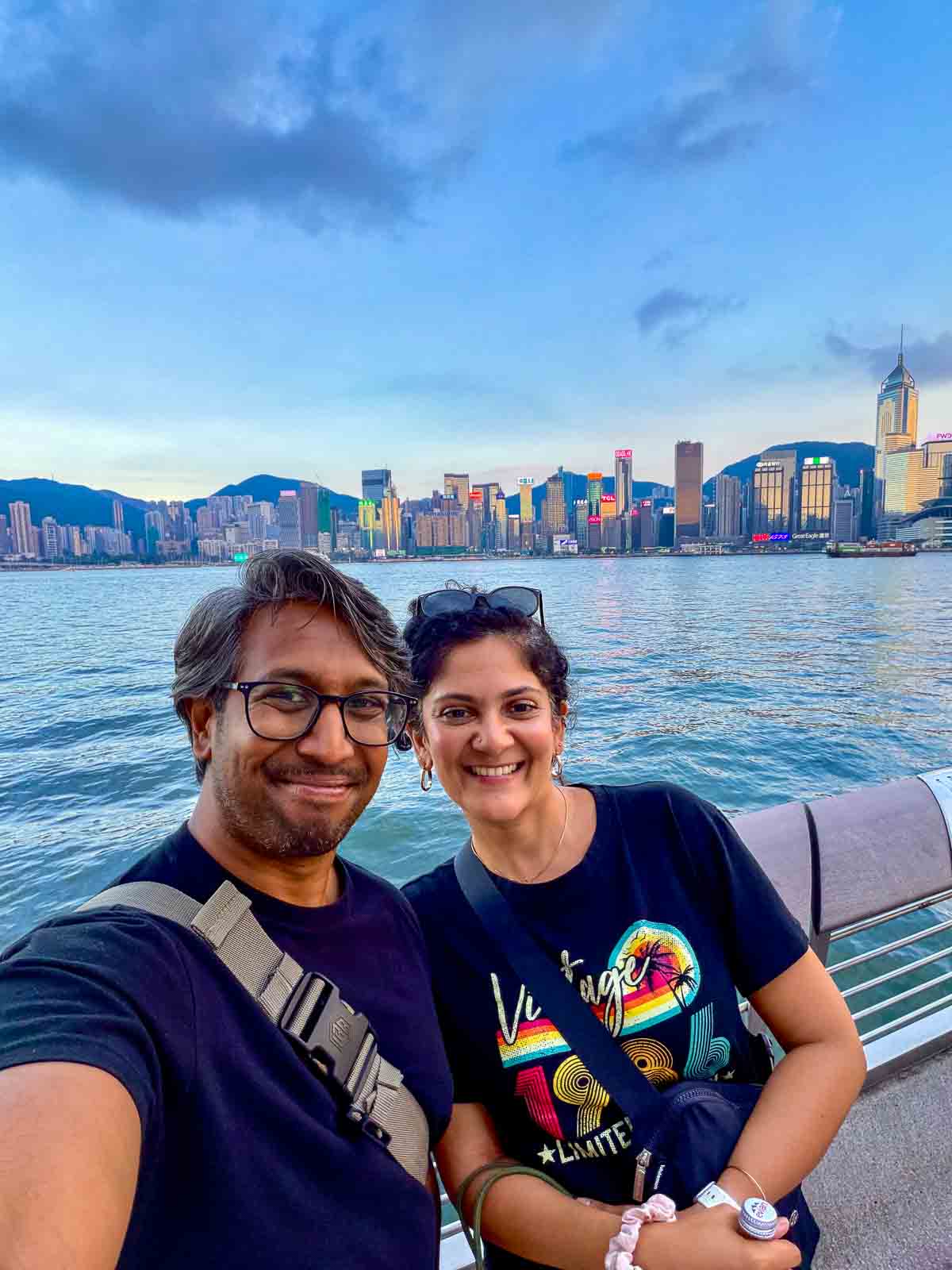
TL;DR: 3 Day Hong Kong Itinerary
- This 3 day Hong Kong itinerary aims to provide you with a solid introduction to a vibrant city. 3 full days is just about enough time to comfortably get a taste of the highlights including Victoria Harbour and the Tian Tan Buddha as well as hidden gems like Chi Lin Nunnery.
SUMMARIZE & SAVE THIS CONTENT ON
| Day | Morning | Afternoon | Evening |
|---|---|---|---|
| Day 1: Victoria Harbour | Avenue of Stars | K11 MUSEA and Star Ferry | Central or Victoria Peak; Symphony of Lights |
| Day 2: Lantau Island | MTR to Tung Chung and Ngong Ping 360 | Big Buddha and Po Lin Monastery | Flexible dinner and harbour walk |
| Day 3: Kowloon | Chi Lin Nunnery and Nan Lian Garden | Mong Kok markets | Temple Street Night Market |
Jump to:
- TL;DR: 3 Day Hong Kong Itinerary
- Quick planning information
- Why This Hong Kong Itinerary Works
- Where to Stay
- Hong Kong Itinerary Day 1: Victoria Harbour and Central
- Hong Kong Itinerary Day 2: Ngong Ping and the Big Buddha
- Hong Kong Itinerary Day 3: Chi Lin Nunnery, Mong Kok and Temple Street
- Should You Visit Victoria Peak During a Three-Day Hong Kong Trip?
- Essential Hong Kong Travel Tips
- Where to Eat
- How to Adapt This Hong Kong Itinerary
- Frequently Asked Questions
- Is three days in Hong Kong worth it?
Quick planning information
| Question | Recommendation |
|---|---|
| Best area to stay | Tsim Sha Tsui |
| Main transportation | MTR, Star Ferry and walking |
| What to book ahead | Ngong Ping 360; Victoria Peak |
| Expected walking | Approximately 15,000-20,000 steps on full days |
| Best activity for good weather | Ngong Ping |
| Most skippable famous attraction | Victoria Peak during busy sunset hours |
| Best hidden gem | Chi Lin Nunnery |
If you're also sorting out bookings, travel documents and packing, our practical travel tips for first-time travellers cover the preparation that comes before the sightseeing.
Why This Hong Kong Itinerary Works
Hong Kong's attractions are spread across Kowloon, Hong Kong Island and Lantau Island. Trying to jump repeatedly between them wastes time and produces needlessly exhausting days.
This itinerary limits each day to one main geographic area:
- Day 1 introduces Victoria Harbour and connects Kowloon with Central.
- Day 2 is reserved for the longer journey to Lantau Island.
- Day 3 moves through Kowloon from Diamond Hill towards Mong Kok and Jordan.
It assumes you are comfortable using public transportation and walking for much of the day. If you prefer a gentler pace, the suggested substitutions will help you shorten it.
Where to Stay
Tsim Sha Tsui is the most convenient base for this itinerary.
The neighbourhood places you within walking distance of the Avenue of Stars, Victoria Harbour, K11 MUSEA and the Star Ferry. It also has useful MTR connections for Ngong Ping, Diamond Hill and Mong Kok.
We stayed at the InterContinental Grand Stanford Hong Kong in Tsim Sha Tsui East and would choose the area again. Our end of the neighbourhood was quieter, although it required a slightly longer walk to some MTR entrances and the Star Ferry.
Central is the main alternative. Stay there if restaurants, nightlife and Hong Kong Island interest you more than Kowloon. You will, however, cross the harbour more frequently during this itinerary.
Hong Kong Itinerary Day 1: Victoria Harbour and Central
Day 1 is intentionally flexible. Everything before the Star Ferry is close together, making it suitable for an arrival day or a relaxed introduction to Hong Kong.
Suggested Day 1 schedule
| Approximate time | Activity |
|---|---|
| 9:00 a.m. | Breakfast or hotel check-in |
| 10:30 a.m. | Avenue of Stars |
| 12:00 p.m. | K11 MUSEA and lunch |
| 3:30 p.m. | Star Ferry to Central |
| 4:00 p.m. | Explore Central, ride the ding-ding or visit Victoria Peak |
| 7:30 p.m. | Return to Tsim Sha Tsui |
| 8:00 p.m. | Symphony of Lights |
Treat these as guideposts rather than military orders. Your arrival time, hotel location and tolerance for humidity will determine the pace.
Start at the Avenue of Stars
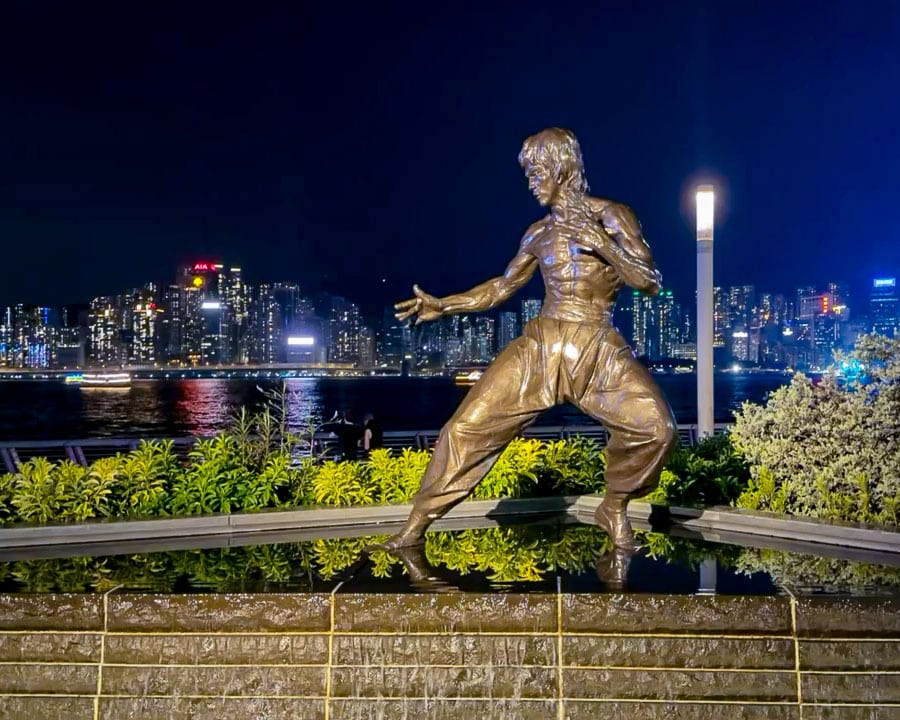
Begin on the Tsim Sha Tsui waterfront with a walk along the Avenue of Stars. The promenade provides an open view across Victoria Harbour towards the Hong Kong Island skyline. It also celebrates Hong Kong cinema through statues and celebrity handprints, including a bronze statue of Bruce Lee.
Allow approximately one hour for the main promenade. You may need longer if you stop frequently for photographs, but this doesn't need to become a half-day attraction.
If cinema often influences where you travel, our selection of travel movies to inspire your next adventure offers more ideas for your watchlist.
Explore K11 MUSEA
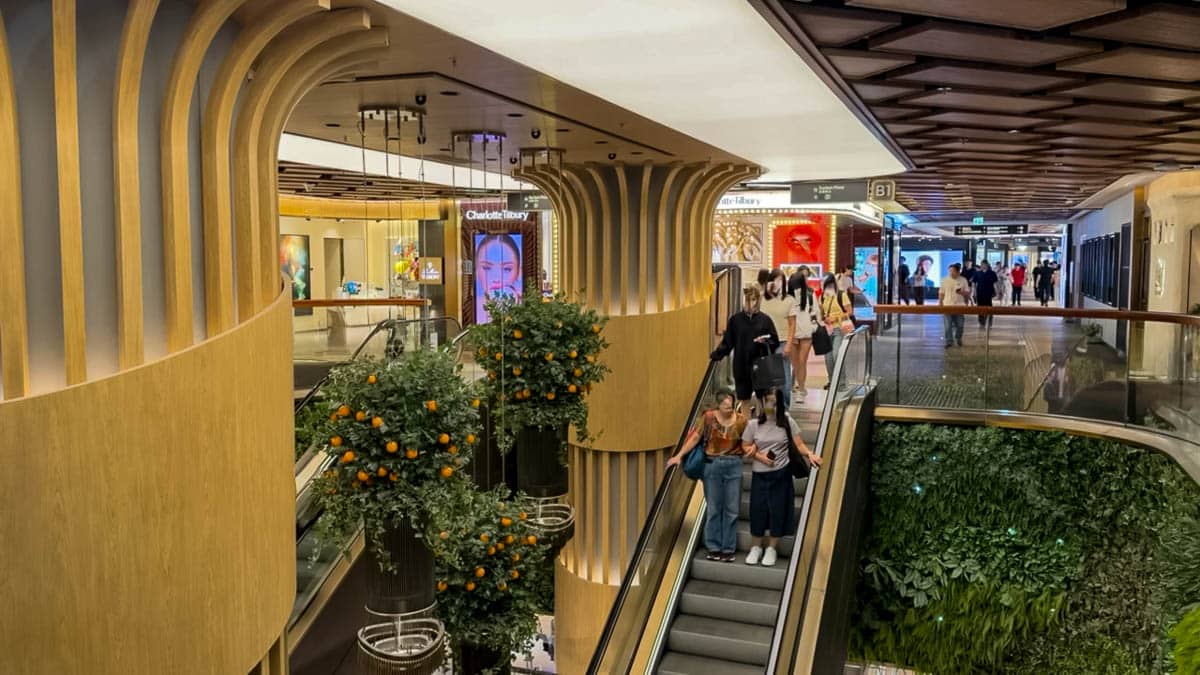
Continue to K11 MUSEA, which sits directly beside the waterfront (where the Avenue of Stars ends). K11 MUSEA combines luxury stores, restaurants, art and elaborate architecture. It is worth seeing even if you do not intend to shop, although serious browsing can quietly consume several hours.
Spend approximately one or two hours here and have lunch before continuing.
If shopping centres don't interest you, replace K11 MUSEA with the nearby Hong Kong Museum of Art or M+.
Take the Star Ferry to Central
Walk west along the waterfront to the Tsim Sha Tsui Star Ferry Pier and take the regular ferry to Central.
The short crossing is both public transportation and one of Hong Kong's simplest pleasures. The Star Ferry operates between Tsim Sha Tsui, Central and Wan Chai, and reservations aren't required. Sit near an open window if possible. The journey is brief, so have your camera ready before the skyline begins sliding past.
Choose One Central Experience
You will probably have time for one substantial activity before returning to Tsim Sha Tsui. Choose according to your interests rather than attempting all three.
Option 1: Ride the Ding-Ding Tram
Take a double-decker tram (affectionately called the "ding ding") between Central and Wan Chai or Causeway Bay.
You don't need to ride the entire route. Despite having its own lanes, the tram moves quite slowly, and a shorter journey provides the experience while leaving time to explore on foot. If you enjoy narrated adventures, check out the TramOramic Tour, which lets you ride a vintage 1920s tram with a tour guide!
Option 2: Explore Central on Foot
Spend the afternoon around Central and Sheung Wan. Depending on your interests and energy, you could visit the Central-Mid-Levels Escalator, Tai Kwun, Hollywood Road or Man Mo Temple.
Choose two nearby stops rather than zigzagging through the district. Central is hilly, and seemingly short walks can involve stairs and steep streets.
Option 3: Visit Victoria Peak
If you want to view the Hong Kong skyline from Victoria Peak, use this afternoon for it. Take the Peak Tram and remain for the late-afternoon view. Be prepared for heavy crowds if you wait till sunset. (Depending on sunset time, you may also miss the Symphony of Lights at 8pm.)
Visiting the Peak replaces the ding-ding and most Central sightseeing. Trying to include everything is where sensible itineraries go to die.
Return for the Symphony of Lights
Take the Star Ferry or MTR back to Tsim Sha Tsui.
The Symphony of Lights is normally staged at 8 p.m. every night and can be watched from the waterfront. Confirm the schedule before visiting because the show is sometimes suspended due to special circumstances or severe weather.
Honestly, the illuminated skyline is more impressive than the synchronized show itself. We recommend seeing it because it's free and convenient - not because it will rearrange your soul. If you watch it from the Avenue of Stars, it'll be accompanied by music that plays around the area.
For a more memorable view, time your Star Ferry crossing so you are on or near the water as the buildings begin to light up or take an inexpensive cruise to watch the Symphony of Lights from the water itself.
If you arrive late on Day 1
Begin with K11 MUSEA and the Avenue of Stars, then remain in Tsim Sha Tsui for the Symphony of Lights.
Move the Star Ferry and Central to the end of Day 2 or replace part of Day 3. Do not race across both sides of Victoria Harbour immediately after a long flight just because an itinerary told you to.
Hong Kong Itinerary Day 2: Ngong Ping and the Big Buddha
Reserve most of Day 2 for Ngong Ping.
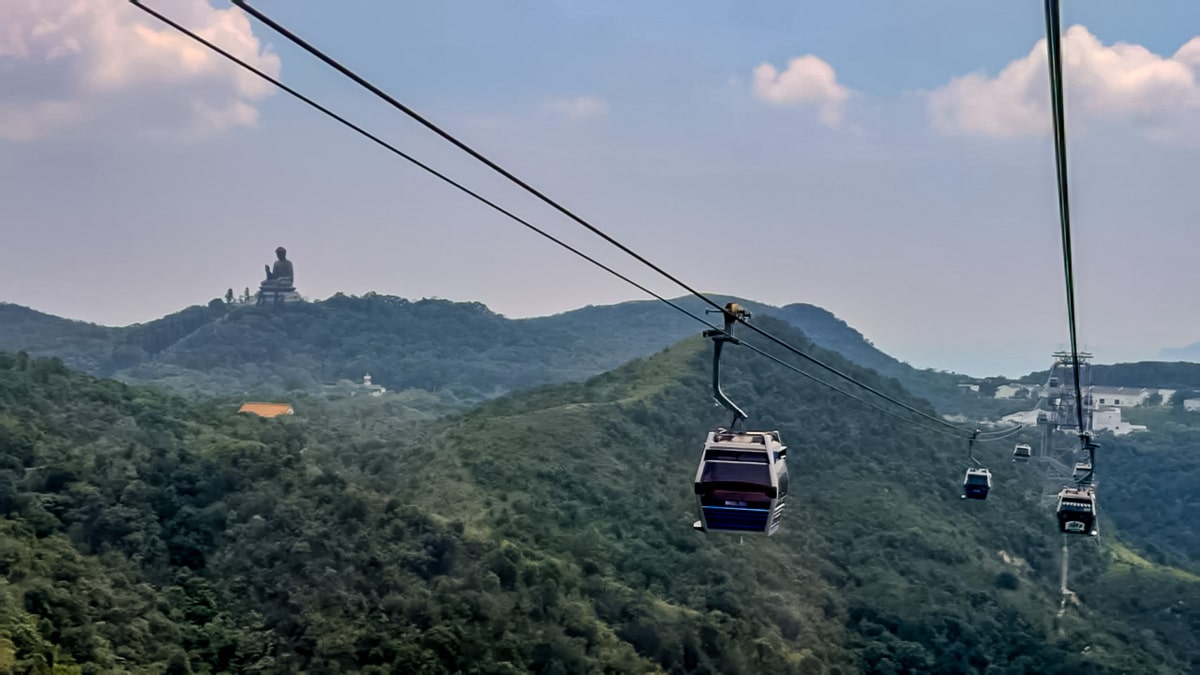
The journey involves travelling to Tung Chung, queuing for the cable car and spending several hours around the Big Buddha and Po Lin Monastery. The Ngong Ping 360 cable car ride is truly breathtaking and will likely be a highlight in your trip! We recommend allowing at least three to four hours at the destination itself, before travel from central Hong Kong.
Suggested Day 2 schedule
| Approximate time | Activity |
|---|---|
| 8:45 a.m. | MTR towards Tung Chung |
| 10:00 a.m. | Ngong Ping 360 cable car |
| 10:45 a.m. | Walk through Ngong Ping Village |
| 11:15 a.m. | Big Buddha |
| 12:30 p.m. | Po Lin Monastery |
| 2:00 p.m. | Lunch and remaining sights |
| 3:30 p.m. | Cable car to Tung Chung |
| Late afternoon | Return to your hotel |
| Evening | Flexible dinner or harbour walk |
Cable-car opening times vary between weekdays, weekends and holidays. Check the official schedule before fixing your departure time. It's worth noting that this is an activity that really benefits from good weather and clear skies.
Getting to Ngong Ping 360
Take the MTR to Tung Chung Station: this is easy to do starting from East Tsim Tsa Tsui station - head towards Tuen Mun on the (brown) Tuen Ma line. Ride two stops to Nam Cheong station. Switch to the (orange) Tung Chung line. Tung Chung Station is the end of the line. The lower cable-car terminal is located nearby and is clearly signposted.
Purchase your Ngong Ping 360 ticket online before travelling. We booked on the same day without a problem, but that may not be wise during weekends, holidays or peak seasons.
The cable car can close for maintenance or suspend operations during severe weather. Check its status before leaving the hotel.
Which Ngong Ping cable-car cabin should you choose?
The standard cabin offers the complete scenery and is honestly sufficient for most visitors.
The Crystal Cabin adds a transparent floor. We enjoyed it but don't consider it essential. If the transparent-cabin experience is particularly important to you, the Crystal+ Cabin provides full height glass walls as well as a glass floor for greater visibility, and can feel like a more meaningful upgrade.
Is it scary?
I have a mild fear of heights and was comfortable for most of the journey. The cabin does move slightly with the wind, and I felt less comfortable during portions of the descent, but the experience was never overwhelming. The cabins are relatively large - comfortably seating 5-6 people.
If you strongly dislike heights, you can reach Ngong Ping by bus instead.
Visit the Tian Tan Buddha
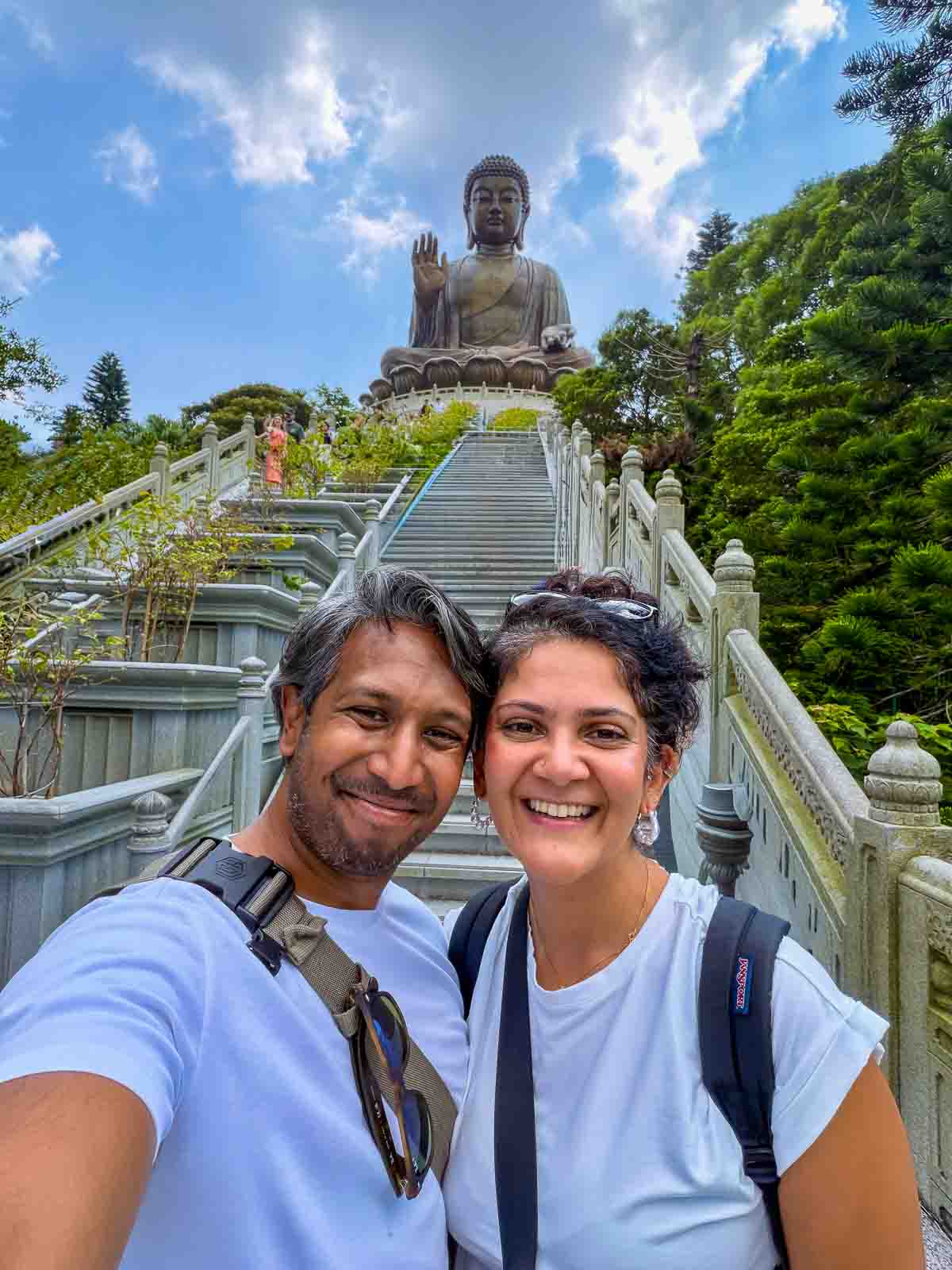
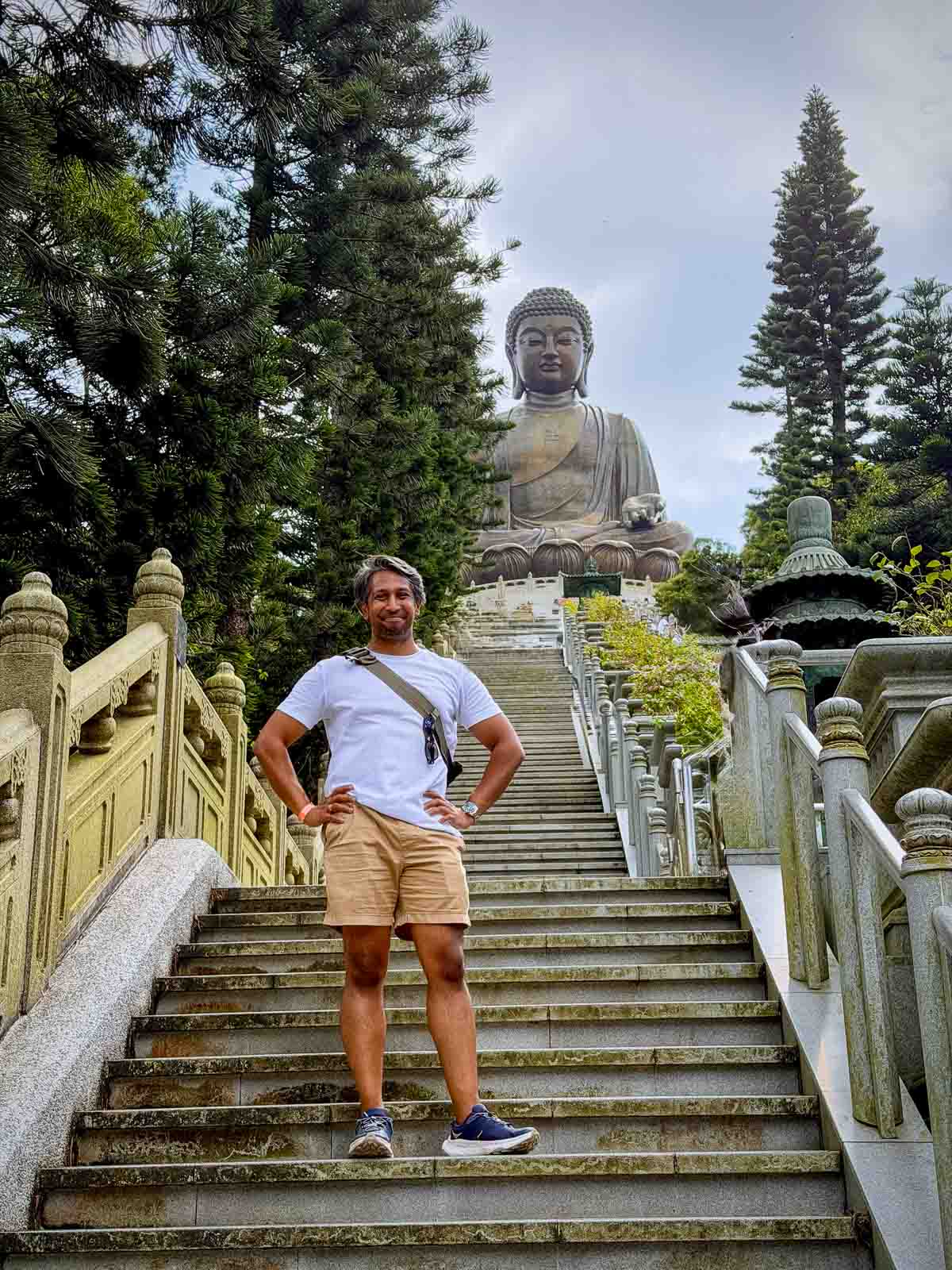
Follow the route from the village to the Tian Tan Buddha, commonly called the Big Buddha. Reaching the upper platform requires climbing a long staircase. The stairs look formidable from below but are manageable at a patient pace. Carry water and take your time during hot or humid weather.
You can still see the Buddha without completing the climb, making the visit possible for people who are unable or unwilling to tackle the stairs.
The cable car journey and Big Buddha made Ngong Ping the favourite experience of our trip.
Leave time for Po Lin Monastery
Visit Po Lin Monastery before returning to the cable car. Ngong Ping is better when treated as a destination rather than a photograph. Allow time to see the monastery properly and enjoy the mountain setting.
Should you add the Wisdom Path or Tai O?
Add the nearby Wisdom Path if you enjoy walking and still have time after the monastery.
Tai O fishing village can turn Ngong Ping into a complete Lantau Island day, but it requires additional transportation and removes the relaxed evening from this itinerary. We did not visit Tai O ourselves, so we would treat it as an alternative version of Day 2 rather than an addition.
Keep the evening flexible
Return to Kowloon during the late afternoon and plan a relaxed dinner.
If you still have plenty of energy, take the Star Ferry, visit Temple Street or walk along Victoria Harbour. Otherwise, take it easy. Three-day itineraries are inherently busy, but filling them to the point that everyone involved is exhausted is usually a recipe for discontent.
Hong Kong Itinerary Day 3: Chi Lin Nunnery, Mong Kok and Temple Street
Day 3 moves from peaceful Diamond Hill towards the increasingly crowded streets of Mong Kok and Jordan. It is an active day, but the route is more coherent than attempting to combine multiple temples, museums and distant residential estates.
Suggested Day 3 schedule
| Approximate time | Activity |
|---|---|
| 9:30 a.m. | MTR to Diamond Hill |
| 10:00 a.m. | Chi Lin Nunnery |
| 11:30 a.m. | Nan Lian Garden |
| 1:00 p.m. | Travel to Mong Kok and have lunch |
| 2:30 p.m. | Mong Kok streets and markets |
| 5:00 p.m. | Coffee or shopping break |
| 6:30 p.m. | Dinner |
| After dark | Temple Street Night Market |
Begin at Chi Lin Nunnery
Take the MTR to Diamond Hill and begin at Chi Lin Nunnery.
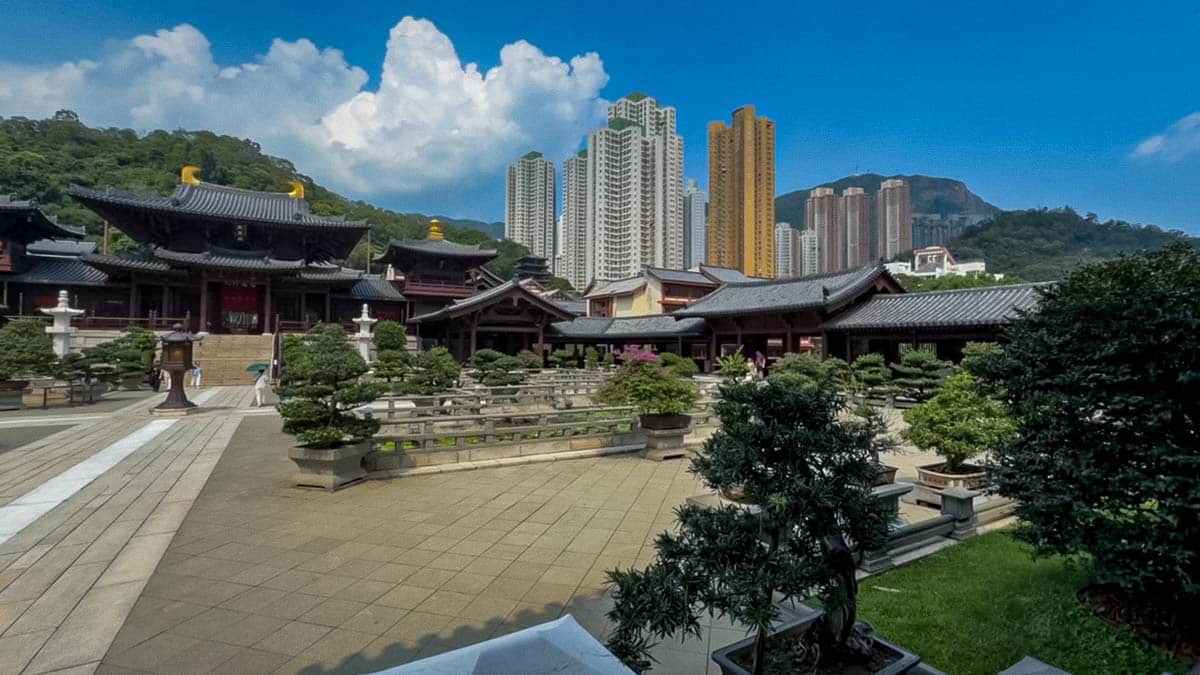
The Buddhist complex contains wooden architecture, lotus ponds and quiet courtyards framed by high-rise apartment buildings. It feels remarkably calm despite its urban setting.
Chi Lin was one of the biggest surprises of our trip and a favourite for both of us. It also felt less crowded than Hong Kong's better-known attractions.
Remember that this remains a religious site. Keep voices low and follow the posted photography restrictions. It's also worth noting that consuming any food or drink (except water) is forbidden while touring the grounds.
Continue into Nan Lian Garden
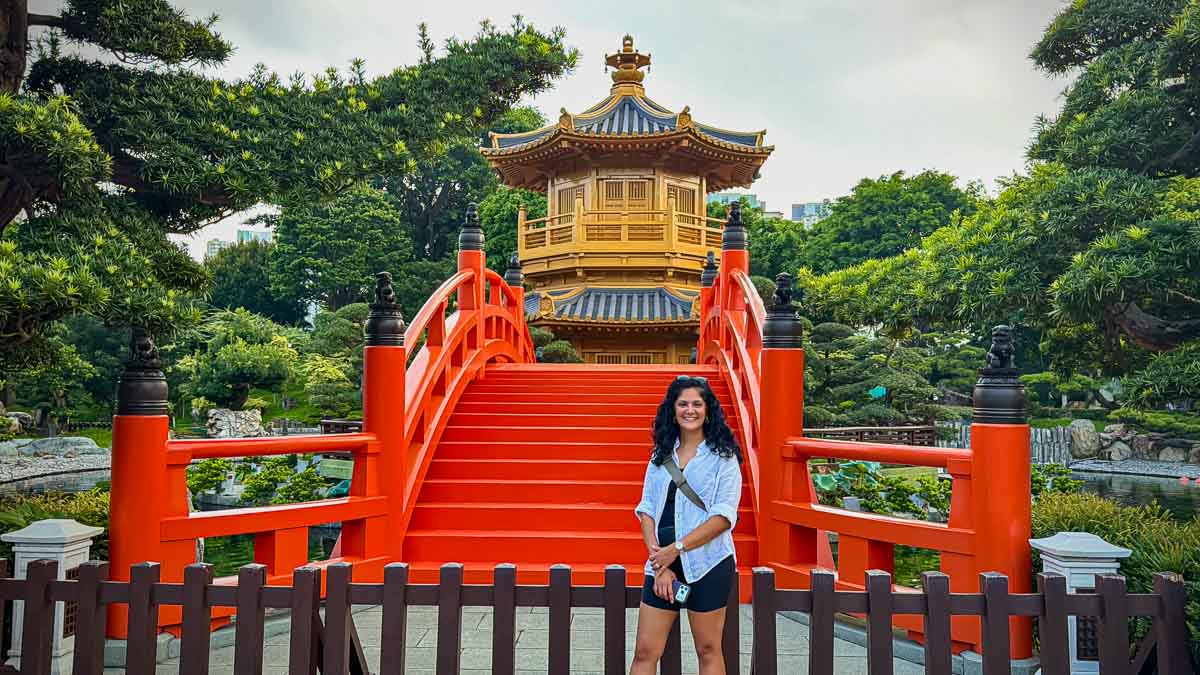
Walk directly into neighbouring Nan Lian Garden. The two are officially promoted as a combined Diamond Hill visit and it makes sense to visit them together as they're so close to one another.
The garden contains ponds, bridges, carefully arranged trees and traditional-style buildings.
Allow approximately two to three hours for the nunnery and garden together. They can be seen faster, but rushing through Hong Kong's most peaceful stop would rather miss the point.
Spend the afternoon in Mong Kok
Take the MTR to Mong Kok and have lunch before exploring.
Rather than trying to visit every market listed online, select one or two areas that match your interests. Ladies' Market is the obvious option for souvenirs and inexpensive goods, while Fa Yuen Street and the surrounding streets offer a broader neighbourhood experience.
Give yourself time to wander. Mong Kok is more useful as an area to experience than as a checklist of stalls.
For a break, Halfway Coffee has a characterful Mong Kok location that's popular with people looking for a great Instagram-friendly aesthetic.
Finish at Temple Street Night Market
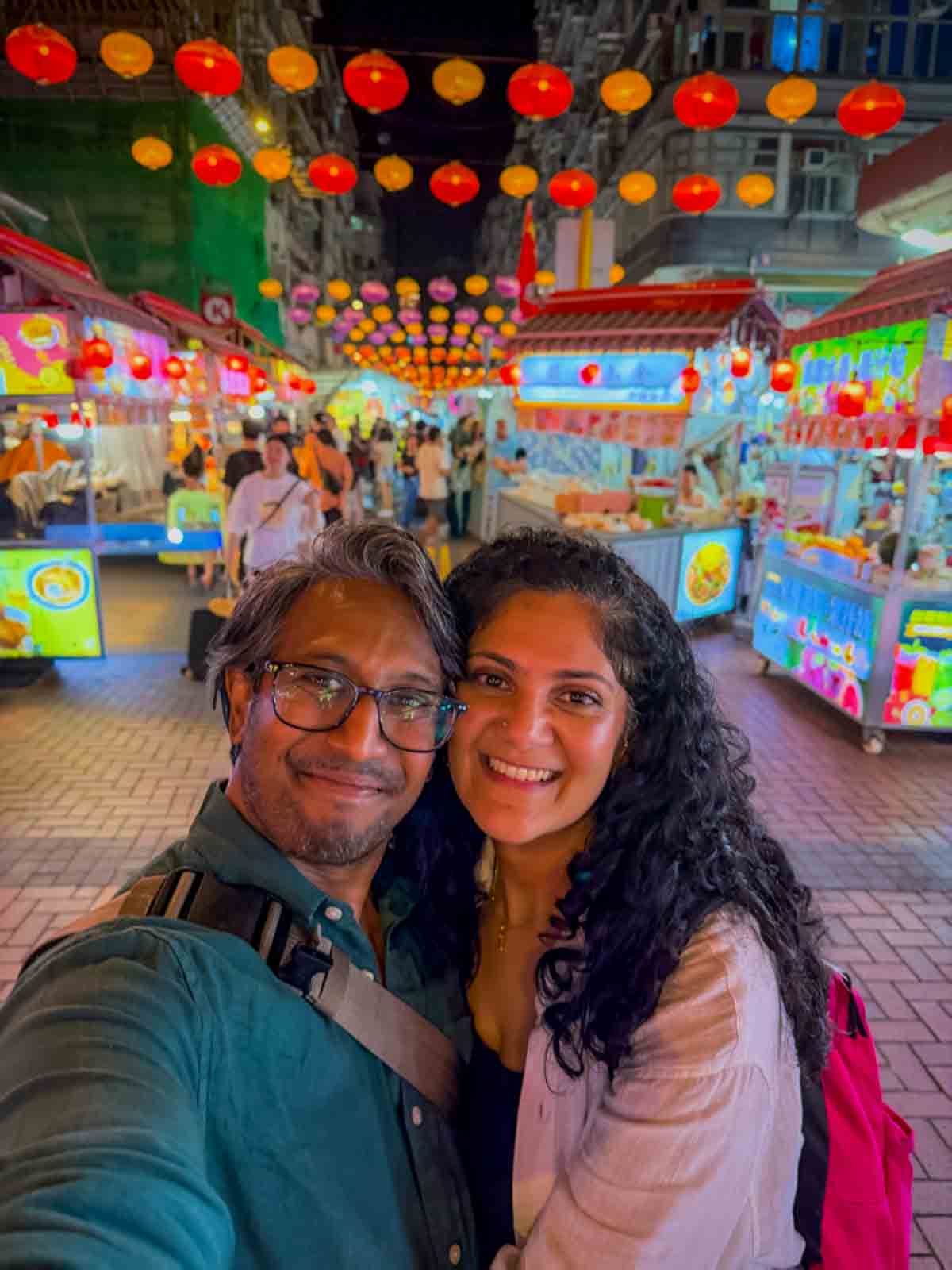
After dark, head over to Jordan for the Temple Street Night Market. Expect souvenir stalls, food vendors and large numbers of visitors.
Temple Street is more tourist-oriented than most of the street markets you'll see in Mong Kok. If you only want one market experience, choose based on what appeals to you:
| Choose Mong Kok for… | Choose Temple Street for… |
|---|---|
| Neighbourhood exploration | A defined night-market experience |
| Everyday shopping streets | Souvenirs and evening stalls |
| A less-contained route | A simple end-of-day destination |
| Afternoon cafés and malls | Food vendors and nighttime atmosphere |
If you are tired after Mong Kok, skipping Temple Street is completely reasonable. We enjoyed it, but it wasn't an essential experience in our opinion.
Should You Visit Victoria Peak During a Three-Day Hong Kong Trip?
Visit Victoria Peak if the iconic elevated skyline view is a major priority. Otherwise, Ngong Ping offers the more memorable overall experience.
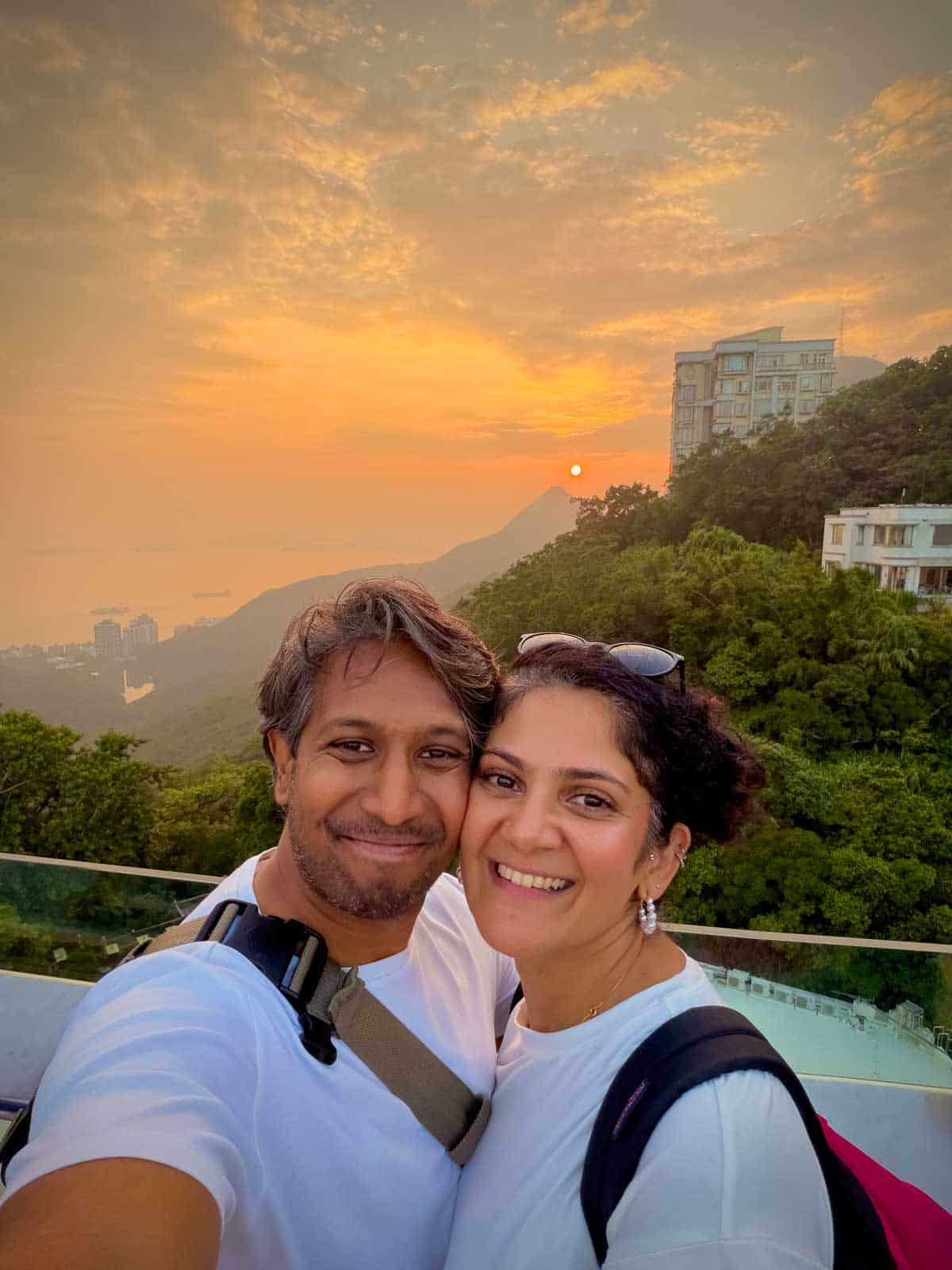
The Peak view is attractive, particularly near sunset, but the Peak Tram and Sky Terrace become extremely crowded. We've tried combining Victoria Peak with Ngong Ping for a single day of incredible views, and would honestly not recommend it. Ngong Ping is the all-round better experience in our opinion.
When to visit Victoria Peak
Replace Day 1's ding-ding and Central exploration with Victoria Peak. Cross to Central on the Star Ferry, travel up during the afternoon and return after sunset.
Alternatively, replace Mong Kok and Temple Street on Day 3. Visit Chi Lin and Nan Lian in the morning, then continue to Central and the Peak.
Both options require sacrificing something. Hong Kong's geography remains stubbornly uninterested in your bucket list.
Peak Tram versus Citybus
The Peak Tram is iconic, steep and surprisingly short. It is also likely to be crowded, especially during peak hours. We used the Ruby Lane Special Priority Access ticket - our pass included a faster line and access to the Sky Terrace 428, but this only shortened part of the wait. It didn't provide a better seat or access to a less-crowded carriage. Instead, we recommend a combo ticket: it's significantly cheaper and has the same access to the Sky Terrace 428, but typically involves a longer initial wait time to get to the tram boarding area.
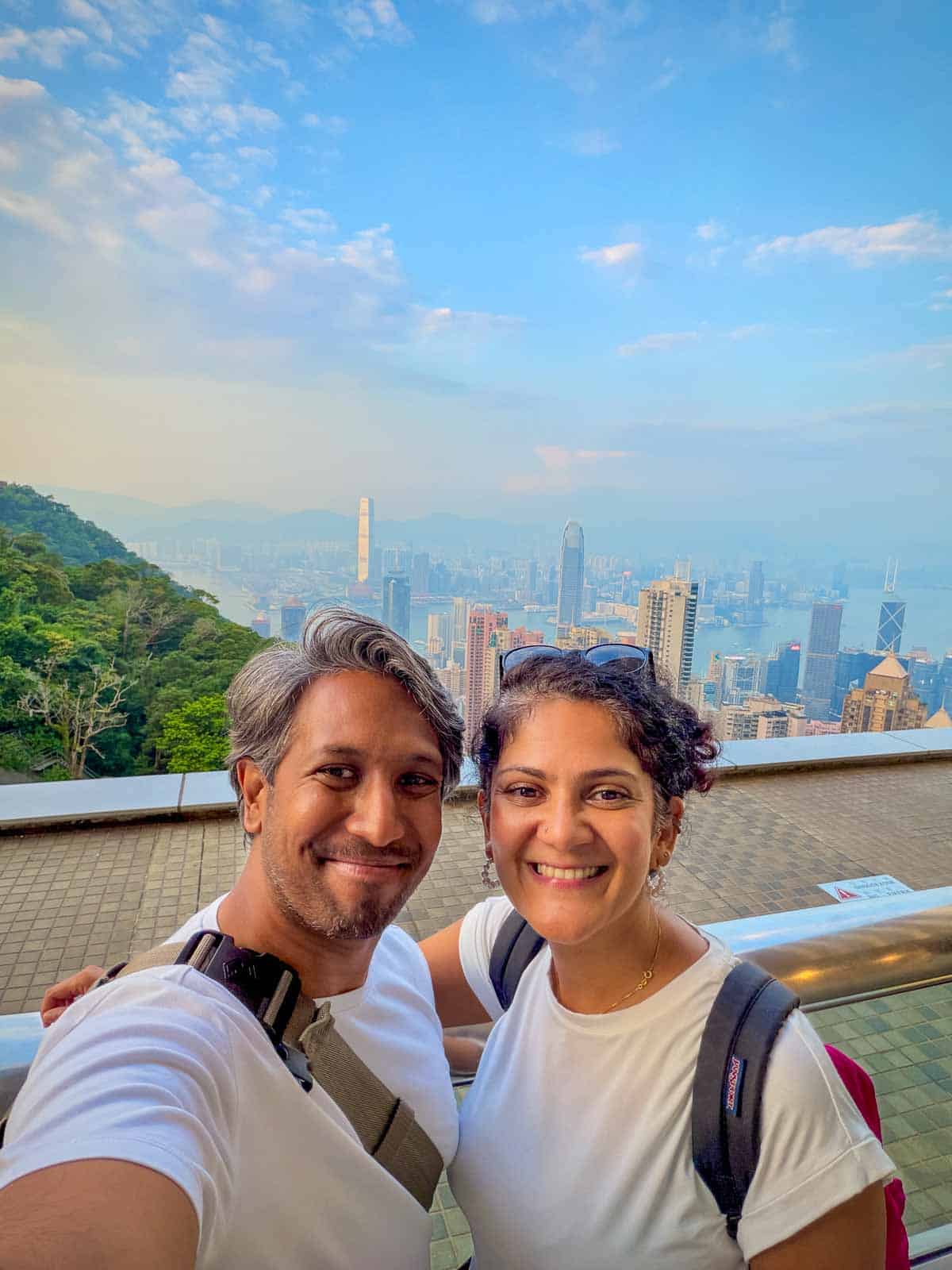
Citybus No. 15 double-decker bus takes much longer but provides changing views of Hong Kong Island. If possible, sit at the very front of the upper deck for the best views. Note: this is a regular public bus, not a sightseeing service.
One sensible compromise is to use the tram in one direction and the bus in the other. We did this and both provide a distinct experience with good views of the Hong Kong skyline.
(Alternatively, if you're in a rush, an Uber is another option to consider.)
Is Sky Terrace 428 worth it?
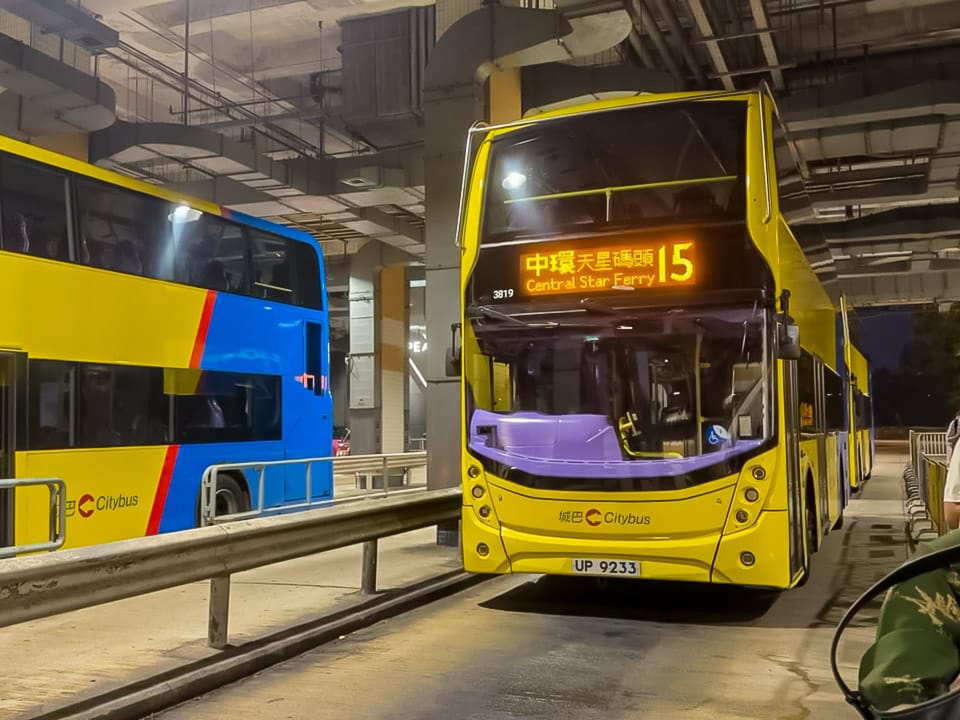
Sky Terrace 428 provides a clear skyline view, but it can become unpleasantly crowded around sunset.
Nearby paths and public viewpoints offer alternatives without requiring everyone to compete for the same section of railing. If you value the walk and atmosphere more than obtaining one specific photograph, consider exploring around the Peak instead. Taking a 15-20 minute stroll down Lugard Road will lead you to the Lugard Road Lookout, which is less crowded and offers a slightly lower-but-still-excellent viewpoint.
Essential Hong Kong Travel Tips
Booking Ngong Ping & Victoria Peak tram tickets
Book your Ngong Ping 360 cable car and Victoria Peak tram tickets the day before and make sure to check the operational status (as well as on the day you intend to take it!) of both activities. Earlier reservations are especially sensible on weekends and holidays.
Note: There are periods of the year where both activities are closed for scheduled maintenance. Be sure to check before you travel so that you can adapt your schedule accordingly.
Expect considerable walking
Hong Kong is a very walkable city. However its slopes, stairs and humidity can make a walk feel more demanding. Wear comfortable shoes and build cafés or indoor attractions into the hottest part of the afternoon.
We walked approximately 15,000 to 20,000 steps each day with this itinerary and using the MTR.
Do you need an Octopus card?
Not necessarily. A lot of bloggers and sites say the Octopus Card is an absolute necessity, but this is somewhat outdated at this point.
We used contactless credit cards and mobile wallets for most transportation and purchases without ever buying an Octopus card. Visa and Mastercard were accepted more consistently than American Express. Just make sure to use the same card to tap in and out of the MTR stations.
An Octopus card remains useful for convenience and for smaller businesses that do not accept regular credit cards. Some traditional cha chaan tengs accept only cash or Octopus.
Is English widely spoken?
English signage is common, but spoken English was less widespread than we expected.
Communication was easy at our hotel and major attractions. Smaller restaurants sometimes required Google Translate, particularly when asking detailed questions about ingredients.
What is the best time to visit Hong Kong?
The best overall time to visit Hong Kong is from October to December, when the weather is cool, dry, and comfortable for outdoor activities. Daytime temperatures range from 20°C to 28°C (68°F to 82°F) with low humidity and clear skies (but note that it gets cooler in the evening, especially in December when temperatures can fall as low as 16°C). It is ideal for hiking, walking the city streets, and getting clear views of Victoria Harbour.
Alternatively, March to April (Spring) also offers pleasant temperatures and blooming greenery, though humidity and occasional fog start to increase.
Low Season
June through September (Summer) is the low season in Hong Kong. The weather is hot, humid, and prone to heavy downpours and typhoons. However, tourism numbers drop, often leading to lower hotel rates and fewer crowds at major attractions.
Do you need mobile data?
We found free Wi-Fi in our hotel, MTR stations and many shops and cafés. Offline maps allowed us to manage without constant data.
A local eSIM or roaming plan would still make navigation and translation easier. Free Wi-Fi tends to vanish at precisely the moment you are standing on the wrong street.
Where to Eat
Assuming you're staying in the Tsim Sha Tsui area like we did, NOC Coffee and Black Sugar Coffee are good breakfast options. Both are located in the Empire Centre which has multiple other food options as well.
Alternatively, for a more traditional Hong Kong cha chaan teng 茶餐廳 ("tea restaurant"), Red Tea on Cameron Road and Lan Fong Yuen on Nathan Road are great options that are popular with visitors and locals alike. (Note: These locations do not accept credit cards.)
When it comes to your lunches and dinners, this will depend entirely on what's close to you. Here are some recommendations of places we've tried near the top tourist spots:
If you're near:
- K11 MUSEA, check out Golden Blossoms or the food court in the mall basement
- Ngong Ping, check out the Po Lin Monastery Restaurant (vegetarian)
- Victoria Peak, try Petit Jardin
- Chi Lin Nunnery, try Long Men Lou (also known as Chi Lin Vegetarian)
Pork-Free Meals in Hong Kong
Pork is often used in Cantonese cuisine. For travellers looking for pork-free meals, your easiest option is to look at vegetarian dishes/restaurants, or halal restaurants like Zhu Mian Ren in Tsim Sha Tsui.
If this is something that concerns you, you should ask about broths and cooking fats if you avoid pork. Pork is sometimes used in dishes that may surprise you (for example, many beef noodle soups will be prepared with a pork broth).
How to Adapt This Hong Kong Itinerary
| Your concern | Recommended change |
|---|---|
| Slower travel | Remove either Mong Kok or Temple Street |
| Victoria Peak | Replace Day 1’s Central exploration or Day 3’s markets |
| More food and coffee | Shorten K11 MUSEA and skip the Peak |
| More of Lantau Island | Add Tai O and keep Day 2 entirely free |
| Shopping | Spend longer at K11 MUSEA and in Mong Kok |
| Travelling with children | Replace one complete day with Ocean Park or Disneyland |
| Late Day 1 arrival | Remain in Tsim Sha Tsui and move Central elsewhere |
| Mobility limitations | Skip climbing the Big Buddha and skip the street markets |
Travelling solo and hoping to meet people along the way? Our guide to making friends while travelling as an introvert includes low-pressure options such as small-group walking tours, which could replace some of your independent exploring.
Frequently Asked Questions
Yes. Three days is enough to experience Victoria Harbour, Ngong Ping, the Big Buddha, a temple and garden, and at least one major market district. It is not enough to visit every headline attraction without rushing.
It is possible but not recommended. The attractions are far apart, both can involve queues, and combining them reduces the time available for Po Lin Monastery and the Peak's walking routes.
Ngong Ping provides the stronger overall experience because it combines a scenic cable-car journey, mountain setting, Big Buddha and Po Lin Monastery. Victoria Peak is better if your priority is the classic elevated view of Hong Kong's skyline and shopping.
Tsim Sha Tsui is the most convenient base because it offers easy access to Victoria Harbour, the Star Ferry, multiple MTR connections, restaurants and evening attractions.
Is three days in Hong Kong worth it?
A good three-day Hong Kong itinerary should not attempt to cover the entire territory. It's a big city with plenty to do! Instead, three days in Hong Kong is the perfect trip to sample the different flavours the city offers - historical sites and temples, gardens, food, a stunning harbour, and plenty of shopping.
This approach gives you Hong Kong's essential contrasts: illuminated towers and mountain temples, crowded markets and silent gardens, luxury malls and ordinary public ferries. The city is a fascinating amalgamation of the old and new worlds.
Three days is nowhere near enough time to "complete" Hong Kong. It is however perfect to give you a feel of what Hong Kong's really about, and certainly enough to make you want to return.
It's a big world, but we're never too far away! SIGN UP for the Travel & Chai newsletter, and follow Travel & Chai on Instagram and Pinterest to keep in touch.
Leave a Reply