
Venice is beautiful, confusing, expensive in places, and unlike anywhere else we've visited. After spending a few days exploring the city, these are the Venice travel tips we found genuinely useful - including a few things we learned the hard way.
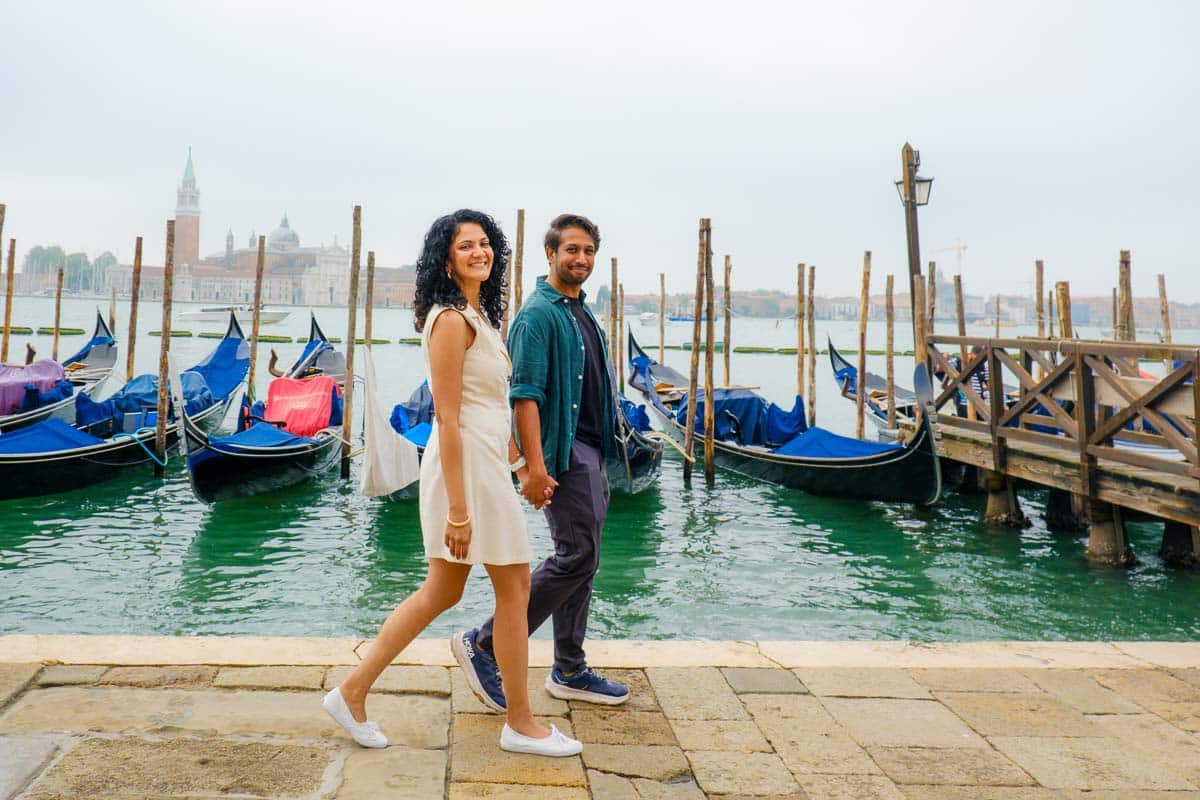
Venice Travel Tips At A Glance
- Planning a trip to Venice? These 10 Venice travel tips cover vaporetto passes, gondola prices, food, restaurant charges, where to stay, and Venice at night.
- Plan extra time for getting around, compare vaporetto passes before buying tickets, stay somewhere easy to reach with luggage, budget for Venice's famous splurges, eat Venetian specialties, and make time to experience the city after dark.
SUMMARIZE & SAVE THIS CONTENT ON
Jump to:
- Venice Travel Tips At A Glance
- 1. Give Yourself Extra Time to Get Around Venice
- 2. Do You Need a Venice Vaporetto Pass?
- 3. Choose Where to Stay in Venice Based on More Than Distance
- 4. Know the Dress Code for Venice's Churches
- 5. Pre-Book Major Attractions, But Don't Over-Schedule
- 6. Choose Your Venice Splurges Deliberately
- 7. Understand Coperto and Other Venice Restaurant Charges
- 8. Know What Food Venice Is Known For
- 9. Know Where You Can and Can't Sit Down to Eat
- 10. Experience Venice at Night After Day-Trippers Leave
- Final Thoughts on Visiting Venice
1. Give Yourself Extra Time to Get Around Venice
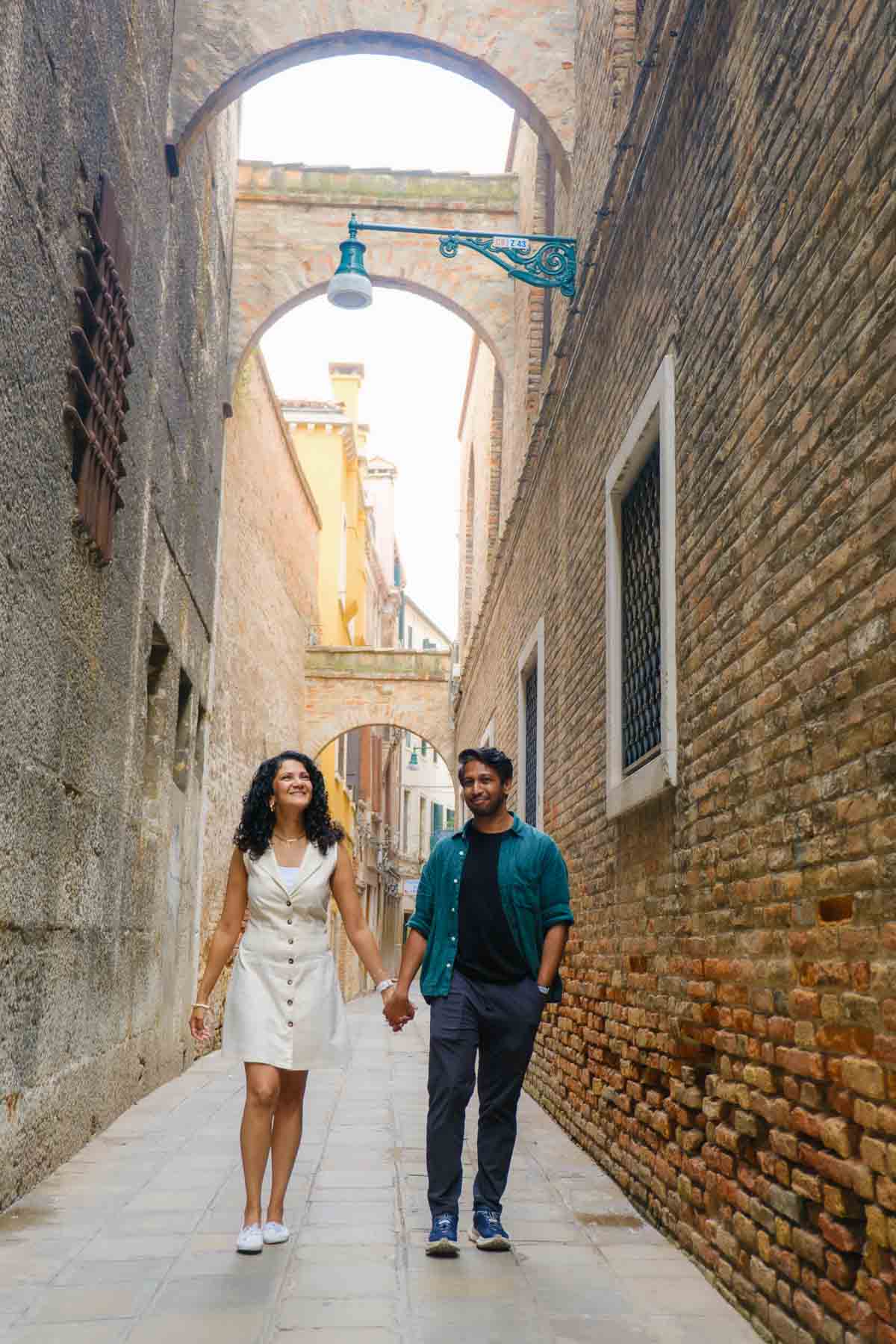
Venice is incredibly walkable. It is not always easy to walk through. The historic centre is a maze of narrow streets, bridges, canals and passages that don't necessarily go where you might think. Google Maps helps, but a predicted 15-minute walk can easily take longer.
We discovered this when we got lost badly enough to miss the beginning of our walking tour on our first day in Venice. If you have a timed attraction, tour or restaurant reservation, give yourself a buffer. (At least until you get your bearings!)
When you don't have somewhere to be, though, getting slightly lost is one of the pleasures of Venice. Some of our favourite moments came from wandering down quieter streets and stumbling onto little canals and squares we hadn't planned to see.
2. Do You Need a Venice Vaporetto Pass?
Whether you need a Venice vaporetto pass depends on how much you actually plan to use the water buses. At the time of writing, a standard ACTV ticket that includes the waterbus network costs €9.50 and is valid for 75 minutes. A 24-hour pass costs €25, a 48-hour pass €35, and a 72-hour pass €45.
That means three waterbus rides within 24 hours already make the daily pass worthwhile. But don't automatically buy a multi-day pass simply because you're staying in Venice for multiple days.
Much of central Venice is best explored on foot. If you're mostly walking and only taking one or two water buses, individual tickets may make more sense. If you're visiting islands like Murano or Burano, or expect to use the vaporetto several times, the passes become much better value.
During our trip to Venice, we used a waterbus only once (at arrival when we had to carry our luggage) and opted to walk everywhere else.
Tip: Check the current ACTV fares before your trip, as prices can change.
3. Choose Where to Stay in Venice Based on More Than Distance
When comparing hotels in Venice, Google Maps doesn't show you one of the most important measurements:
How many bridges are between you and your hotel?
Many Venetian bridges have steps. A hotel that looks like an easy eight-minute walk from your arrival point can become somewhat less appealing when you're dragging luggage over three or four bridges.
Before booking, look at:
- The nearest vaporetto stop
- How you'll get there from the airport or train station
- How many canals you'll need to cross with your luggage
- Whether you actually want to stay in the busiest tourist area
We stayed in Dorsoduro, which worked really well for us. We could easily walk to the major attractions while staying slightly removed from the crowds around St. Mark's Square.
You don't necessarily need to stay in Dorsoduro, but you also don't need to be right beside St. Mark's. In Venice, a slightly quieter neighbourhood can be a feature rather than an inconvenience.
4. Know the Dress Code for Venice's Churches
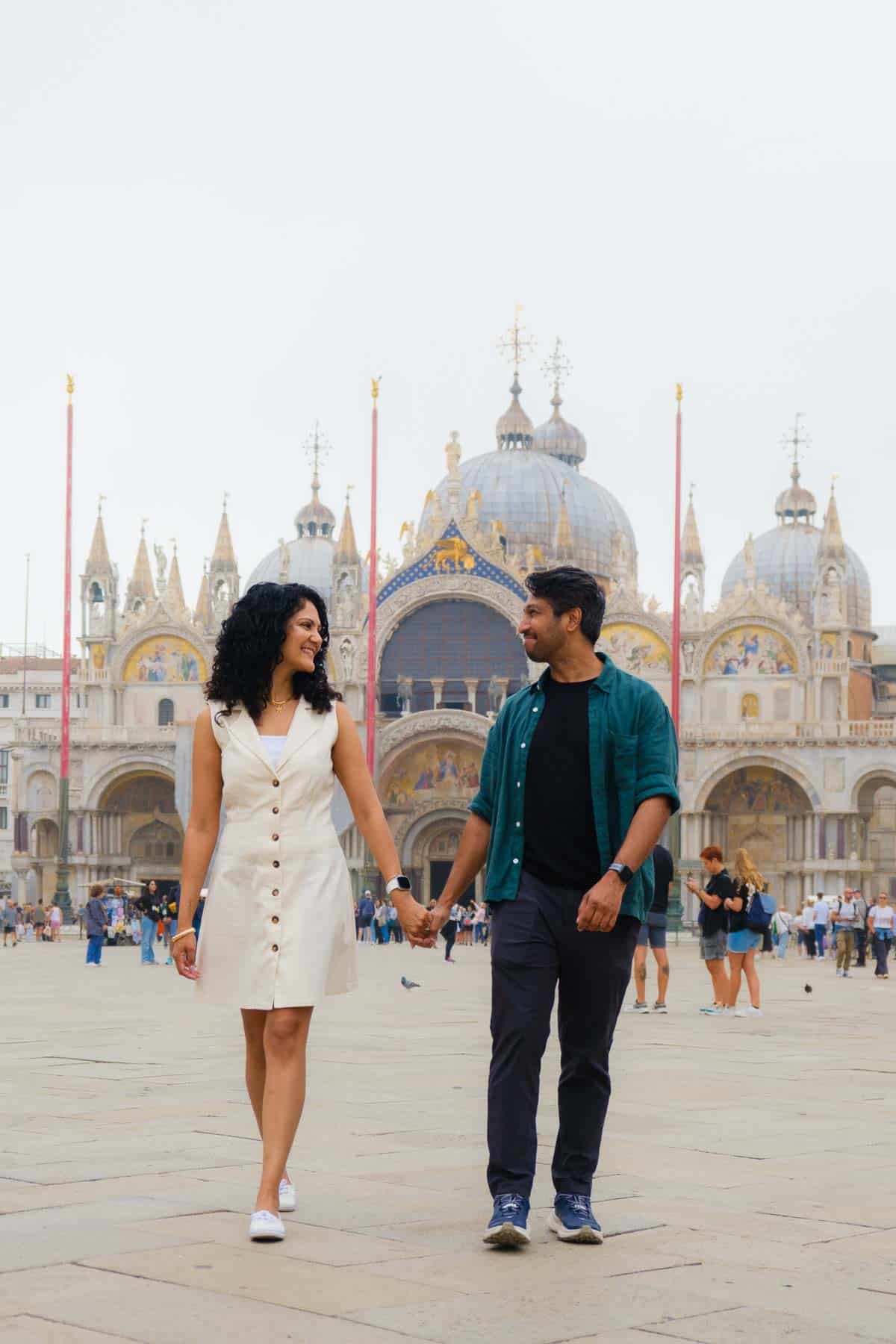
Many of Venice's churches are major tourist attractions, but they're still religious buildings. For St. Mark's Basilica, the official dress code requires shoulders and knees to be covered.
You may see other visitors wearing something that makes you wonder whether the rule is actually enforced. I wouldn't count on getting away with it - especially if you've already booked a timed entrance.
If you're visiting Venice in warm weather, wear appropriate clothing or carry something lightweight that lets you cover up when needed.
It's a very small inconvenience compared with reaching the entrance and discovering your shorts have suddenly become the day's main problem.
If Venice is part of a longer Italy trip, we also put together these things to know before visiting Tuscany, including similar church dress-code rules and other practical lessons we learned there.
5. Pre-Book Major Attractions, But Don't Over-Schedule
For major sights like St. Mark's Basilica and the Doge's Palace, booking ahead can save time and remove some uncertainty from your day. But I wouldn't schedule every hour of a Venice itinerary.
For one thing, getting between places can take longer than expected. More importantly, wandering is genuinely part of the Venice experience. We found the city worked best when we had one or two things we definitely needed to do, with enough space around them to explore.
We used a similar slower approach in our 7-day Tuscany itinerary for first-time visitors, building each day around a few priorities rather than trying to see everything.
You want enough planning that you aren't spending half your trip standing in ticket lines, but enough flexibility to stop when you find an interesting shop, church, café or quiet canal.
6. Choose Your Venice Splurges Deliberately
Venice can get expensive very quickly. But I don't think the answer is to automatically avoid every expensive tourist experience.
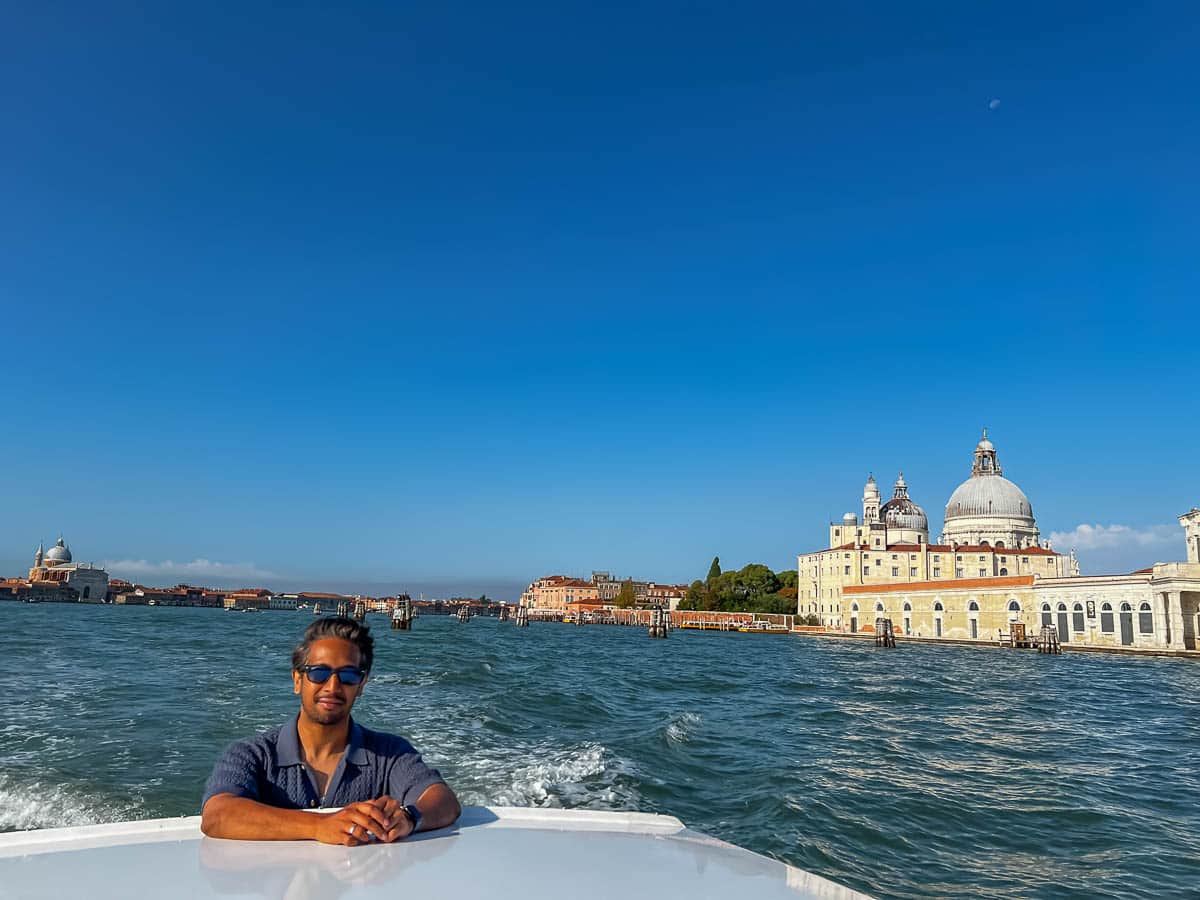
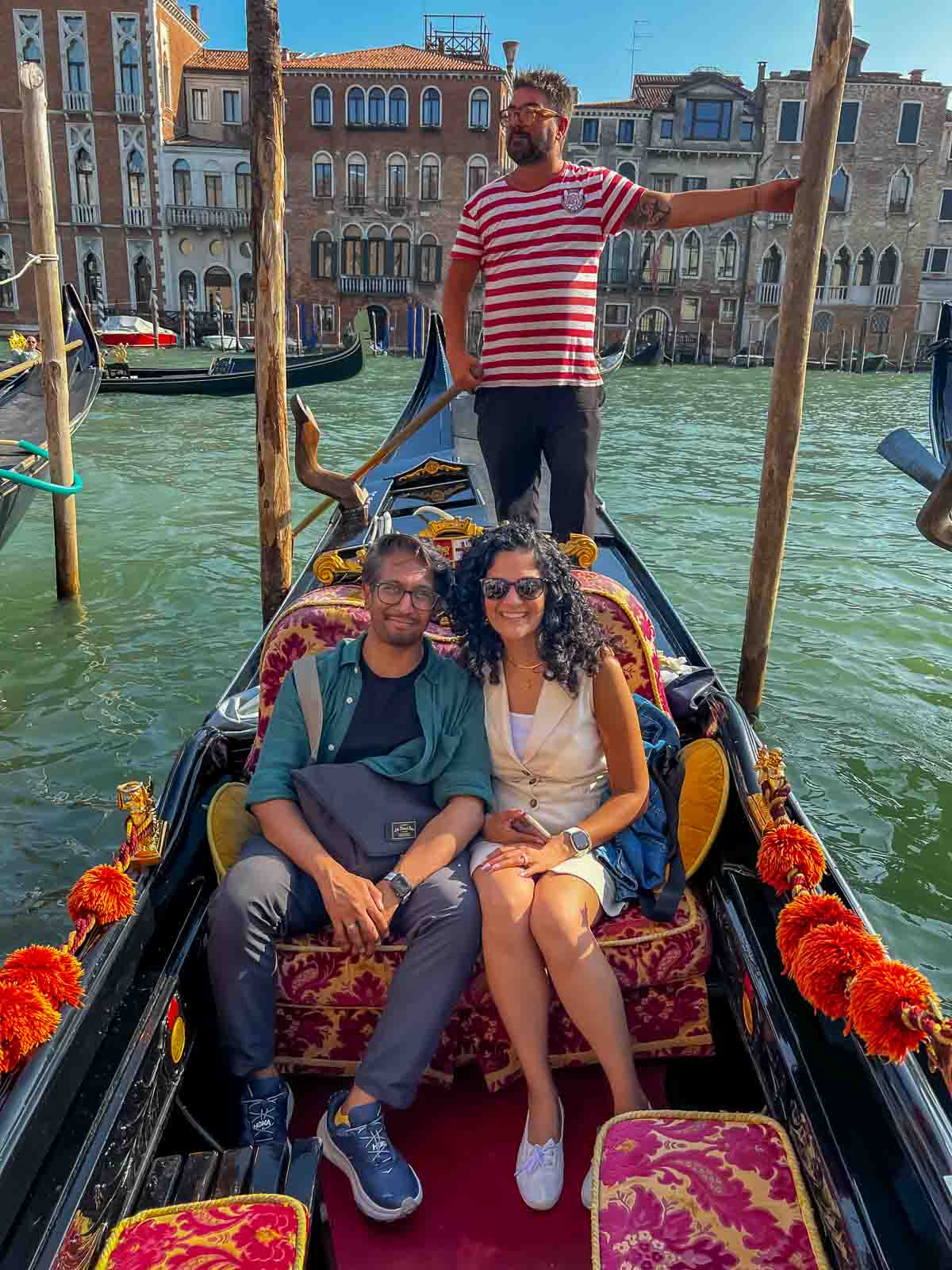
We rode a gondola, had drinks at Caffè Florian in St. Mark's Square, and eventually left Venice by private water taxi. None of those were the budget option. But they were also some of our most memorable experiences.
If you're looking to cut costs, I find the easiest place to start is by choosing more affordable accommodation a little further away from St. Mark's Square.
What is the Venice Gondola Price?
The official Venice gondola price is currently:
- €90 for a 30-minute ride during the day
- €110 for a roughly 35-minute ride after 7 p.m.
A standard gondola can carry up to five passengers. The price is per gondola (not per passenger).
Is €90 a lot of money for half an hour? Yes.
Did we enjoy it? Also yes.
Seeing Venice from the canals feels completely different from walking through the city. If you've always wanted to ride a gondola, I wouldn't automatically skip it because someone online tells you it's touristy.
It is touristy.
You're a tourist.
The better strategy is deciding which expensive experiences genuinely matter to you and spending your money there. For us, the gondola and private water taxi were absolutely worth the splurge.
7. Understand Coperto and Other Venice Restaurant Charges
Before sitting down at a restaurant or café in Venice, take a proper look at the menu. You may see "coperto", which is a per-person cover charge commonly found at restaurants in Italy. Some places may also have service charges, and cafés can have different prices depending on whether you stand at the counter or sit at a table.
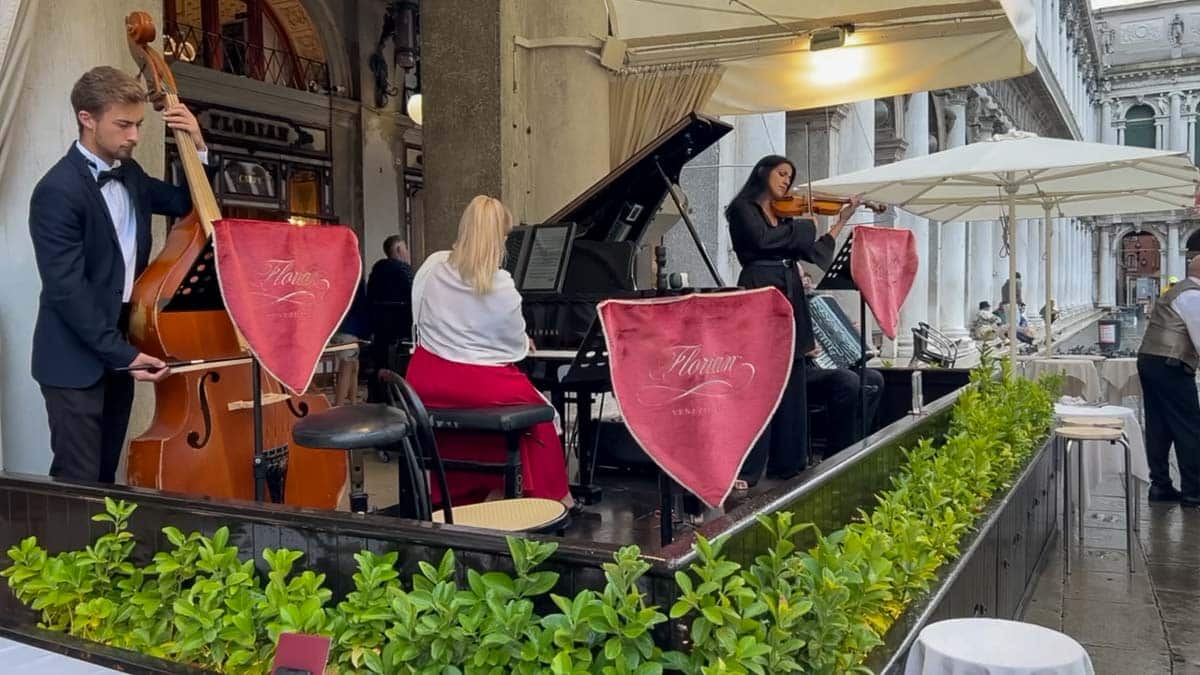
This is particularly worth knowing around St. Mark's Square. Historic cafés such as Caffè Florian aren't simply selling you coffee. You're also paying for the location, table service, atmosphere and history.
When live music is playing, some cafés may also charge a separate music fee. That doesn't automatically make them scams. The important thing is knowing what you're paying before you sit down. But if you're not paying attention, the final bill can be considerably higher than the menu price that first caught your eye.
8. Know What Food Venice Is Known For
A common mistake when visiting Italy is treating the whole country as though it has the same menu. Venice has its own food culture, heavily influenced by the lagoon and its maritime history.
If you want to eat food that feels distinctly Venetian, look for things like:
- Cicchetti - small Venetian snacks usually served in traditional bars ("bàcari")
- Baccalà mantecato - creamy salt cod
- Sarde in saor - sardines with a sweet-and-sour onion mixture
- Cuttlefish and squid-ink dishes
- Seafood risotto
- Polenta

You'll obviously find pizza, pasta and plenty of other Italian food in Venice. But if every meal is something you could just as easily order in Rome or Florence, you're missing out on the actual identity of the city.
9. Know Where You Can and Can't Sit Down to Eat
This is one Venice rule that's easy to miss. The city specifically says that places such as bridges, church steps, monuments, wells and canal banks are not picnic areas. St. Mark's Square has even stricter rules about eating and drinking outside the designated cafés and restaurants.
So if you buy food to go, don't automatically sit down on the nearest picturesque bridge or church steps. Venice deals with huge numbers of visitors inside a very compact historic centre, and behaviours that seem harmless when one person does them become considerably more disruptive when thousands do.
There are plenty of places to stop and eat. Just make sure you've chosen somewhere you're actually allowed to do it.
10. Experience Venice at Night After Day-Trippers Leave
If your itinerary allows it, don't experience Venice exclusively as a day trip. The atmosphere changes completely in the evening. During the day, areas around St. Mark's Square and the Rialto Bridge can be packed. Narrow streets become congested, tour groups are everywhere, and some of Venice's most famous sights can feel overwhelmingly busy.
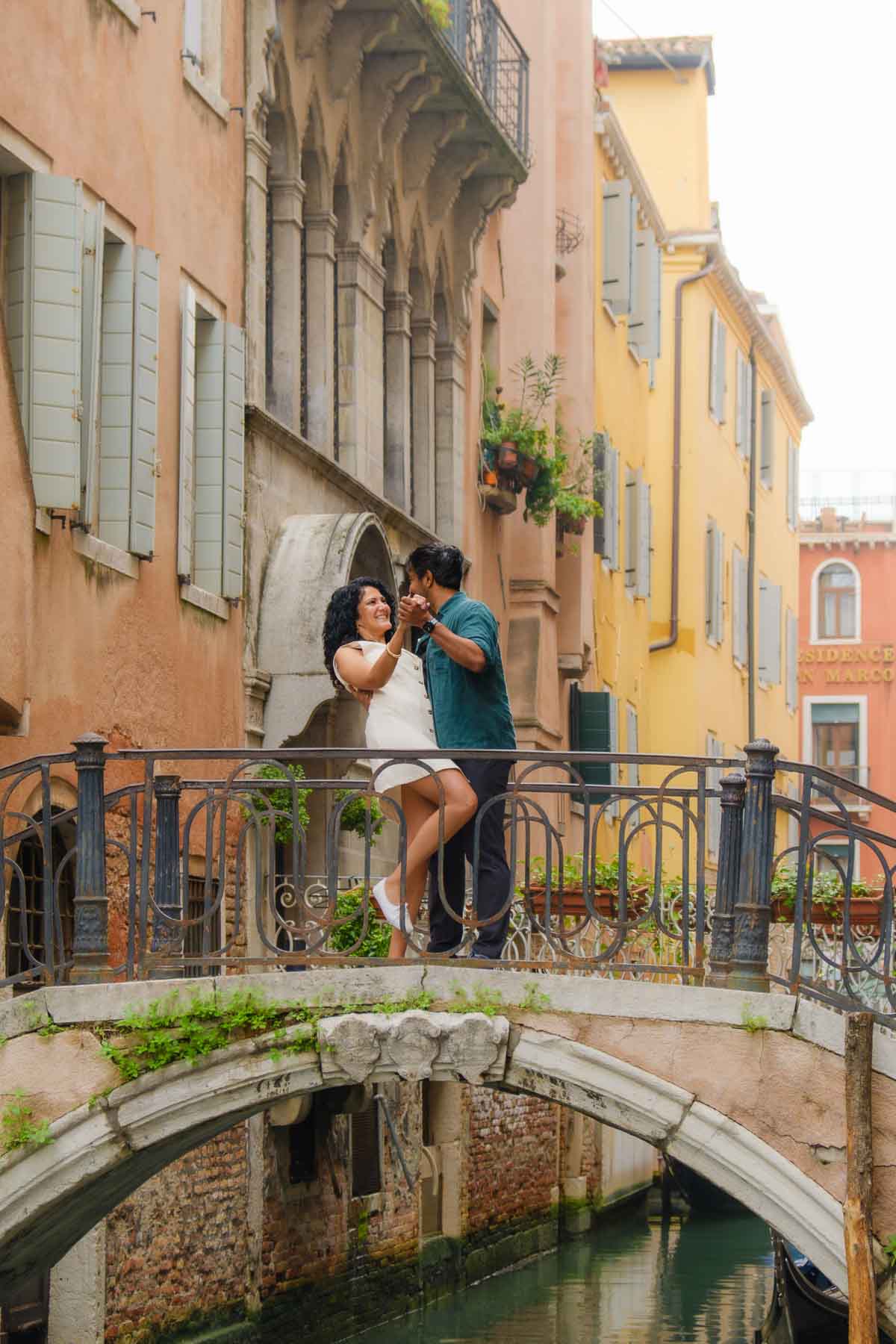
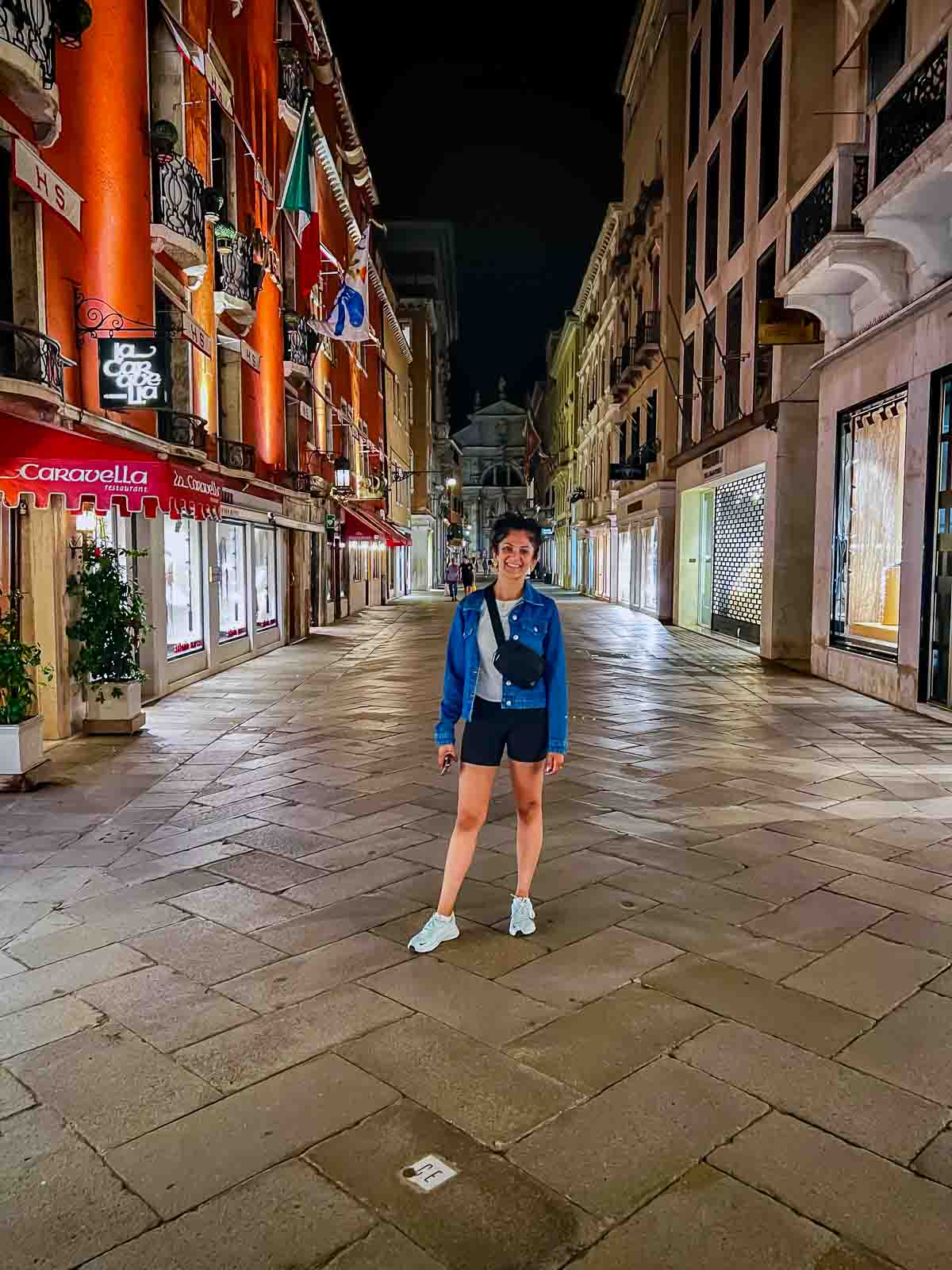
Then evening arrives. Many day visitors leave, the streets become quieter, and Venice assumes a new identity. The canals disappear into darkness. Footsteps echo through narrow alleyways. You have romantic little bridges to yourself.
For us, that was when Venice came closest to the place we'd imagined before visiting. It doesn't become an empty movie set, and there are still plenty of people around. But Venice at night has a completely different atmosphere from Venice in the middle of the day.
If you're deciding whether to stay overnight or simply visit Venice on a day trip, experiencing Venice at night is a good reason to stay.
And if Venice is part of your first big trip abroad, our travel tips for first-time international travellers covers the broader planning details that apply beyond Venice.
Final Thoughts on Visiting Venice
Venice isn't perfect. It's crowded, parts are weathered, and it can get expensive. But there also isn't really anywhere else like it. See the famous attractions. Ride a gondola. Try Venetian food. And leave plenty of time to wander - particularly after the crowds begin to disappear in the evening.
Some of our favourite moments in Venice happened when we weren't really trying to get anywhere. Hopefully these tips for visiting Venice help you spend less time figuring Venice out and more time actually enjoying it.
It's a big world, but we're never too far away! SIGN UP for the Travel & Chai newsletter, and follow Travel & Chai on Instagram and Pinterest to keep in touch.
Leave a Reply