
Rolling green hills, cypress-lined roads, and picturesque hilltop villages-Val d'Orcia is the Tuscany you've probably seen on postcards a hundred times. But with only one day to explore, which places are actually worth visiting?
This one-day Val d'Orcia itinerary takes you through Pienza, the countryside made famous by Gladiator, and some of the region's most beautiful viewpoints. I'll show you what to prioritize, which detours to skip, and how to enjoy a scenic Tuscany road trip without spending the entire day rushing between stops.
TL;DR: One-Day Val d'Orcia Itinerary
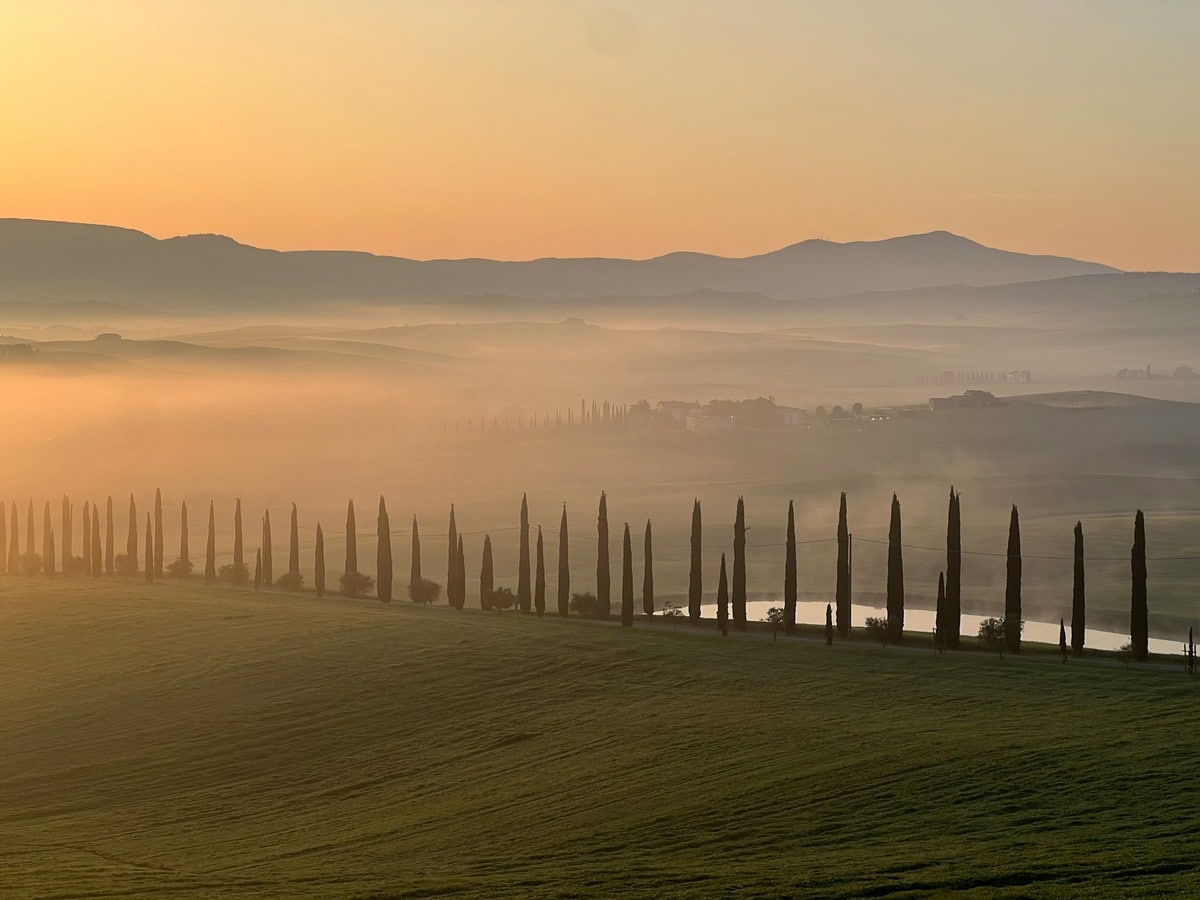
The best way to explore Val d'Orcia in one day is by car, starting in Pienza and making your way west through some of Tuscany's most beautiful countryside.
Our recommended Val d'Orcia itinerary:
- Pienza: Explore the historic town and panoramic viewpoints.
- Terrapille: Visit the countryside made famous by Gladiator.
- Chapel of Vitaleta: Stop at one of Tuscany's most photographed landmarks.
- San Quirico d'Orcia: Wander through this charming medieval village.
- Bagno Vignoni: Finish your day beside its famous thermal-water square.
Time needed: Approximately 8-9 hours, including lunch and sightseeing, excluding travel to and from Val d'Orcia.
Getting around: You'll need a car between towns, but expect some walking, particularly at Terrapille and Vitaleta.
SUMMARIZE & SAVE THIS CONTENT ON
This itinerary is designed to help you experience some of Val d'Orcia's best sights in a single day. You won't have time to explore every village or stop at every beautiful viewpoint (and trust me, there are plenty!). If something particularly catches your eye, don't be afraid to slow down and skip a stop or two.
Your One-Day Val d'Orcia Itinerary
Stop 1: Pienza (9:00-10:30 AM)
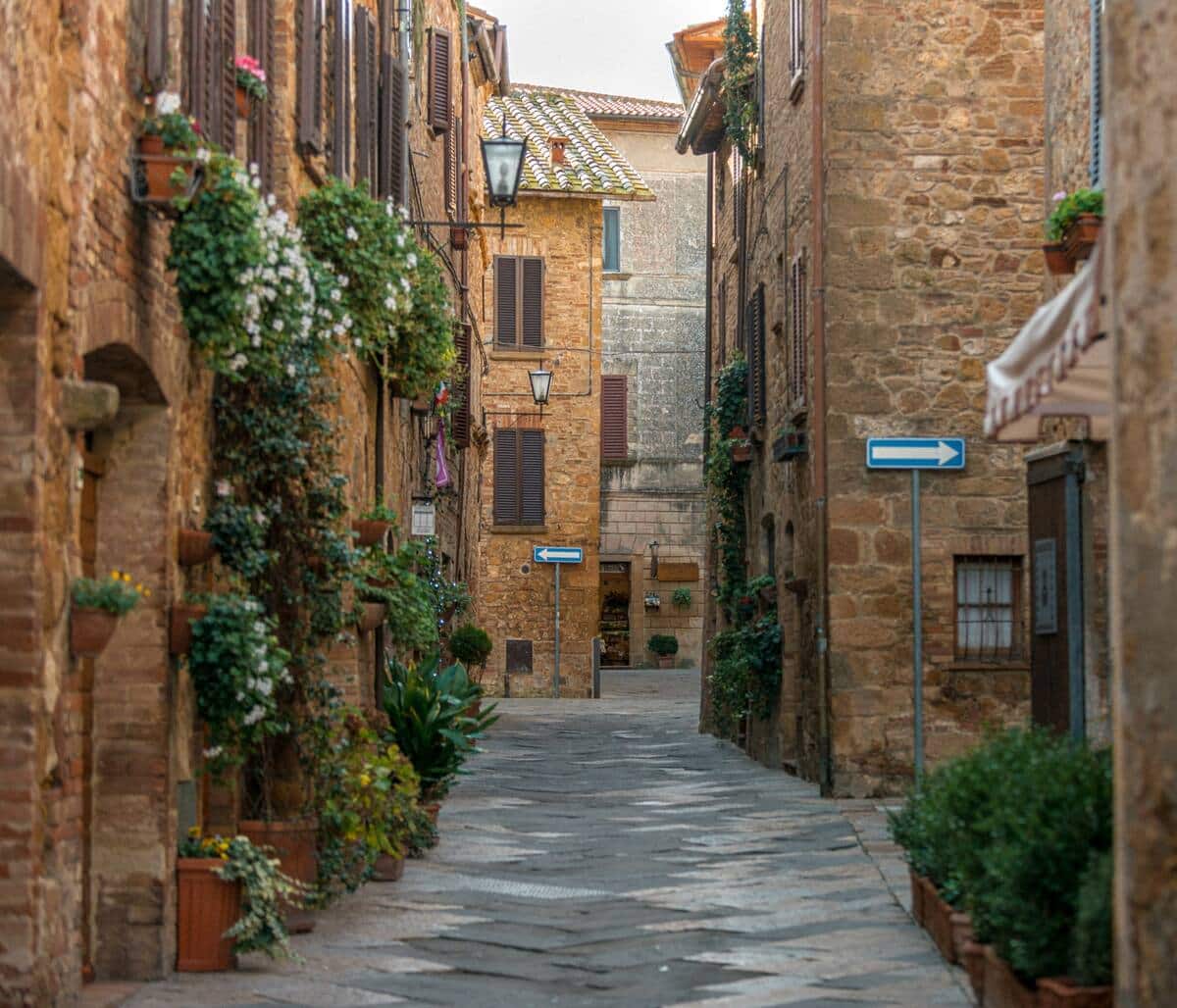
Start your Val d'Orcia road trip in Pienza, a beautiful Renaissance hill town overlooking the Tuscan countryside. It's compact, easy to explore on foot, and a wonderful introduction to the region.
Begin by wandering along Corso Rossellino, the town's main street, towards Piazza Pio II, where you'll find Pienza Cathedral and Palazzo Piccolomini.
Then make your way to Via del Casello, a panoramic walkway offering some spectacular views across Val d'Orcia. This is one of the best places in town to appreciate those famous rolling Tuscan hills.
Pienza is also known for its Pecorino di Pienza, a local sheep's milk cheese. You'll find plenty of little shops selling it, so consider stopping for a taste.
Time needed: Allow around 90 minutes to explore the highlights, or longer if you'd prefer a relaxed morning or to stop somewhere for a breakfast.
Parking tip: Try the paid parking area on Via degli Archi, just outside the historic centre. Pienza has a restricted traffic zone (ZTL), so don't attempt to drive into the old town.
Stop 2: Terrapille - The Gladiator Fields (10:30 AM-12:00 PM)
Just outside Pienza is one of Tuscany's most memorable filming locations: the rolling countryside where Maximus walks through the Elysian Fields in Gladiator (2000).
Even if you're not a huge fan of the movie, the cypress-lined dirt road and beautiful countryside make this a worthwhile scenic stop.
Getting there: Pienza's official tourism website recommends walking from town to Pieve di Corsignano (approximately 10-20 minutes), then continuing downhill towards Terrapille.
There are shorter approaches that locals recommend, including driving closer to the church, but parking restrictions should be checked carefully. I've covered these alternatives in my guide to finding the Gladiator filming spot near Pienza.
I've visited both this location and the farmhouse used as Maximus's home elsewhere in Val d'Orcia. If you only have time for one, I'd prioritize Terrapille. The landscape feels much more connected to the movie, and it's a beautiful place to visit in its own right.
Note: Terrapille is working private farmland, not a public film set. Stay on permitted paths, respect crops and private property, and leave your car in Pienza.

Stop 3: Chapel of Vitaleta (1:30-2:30 PM)
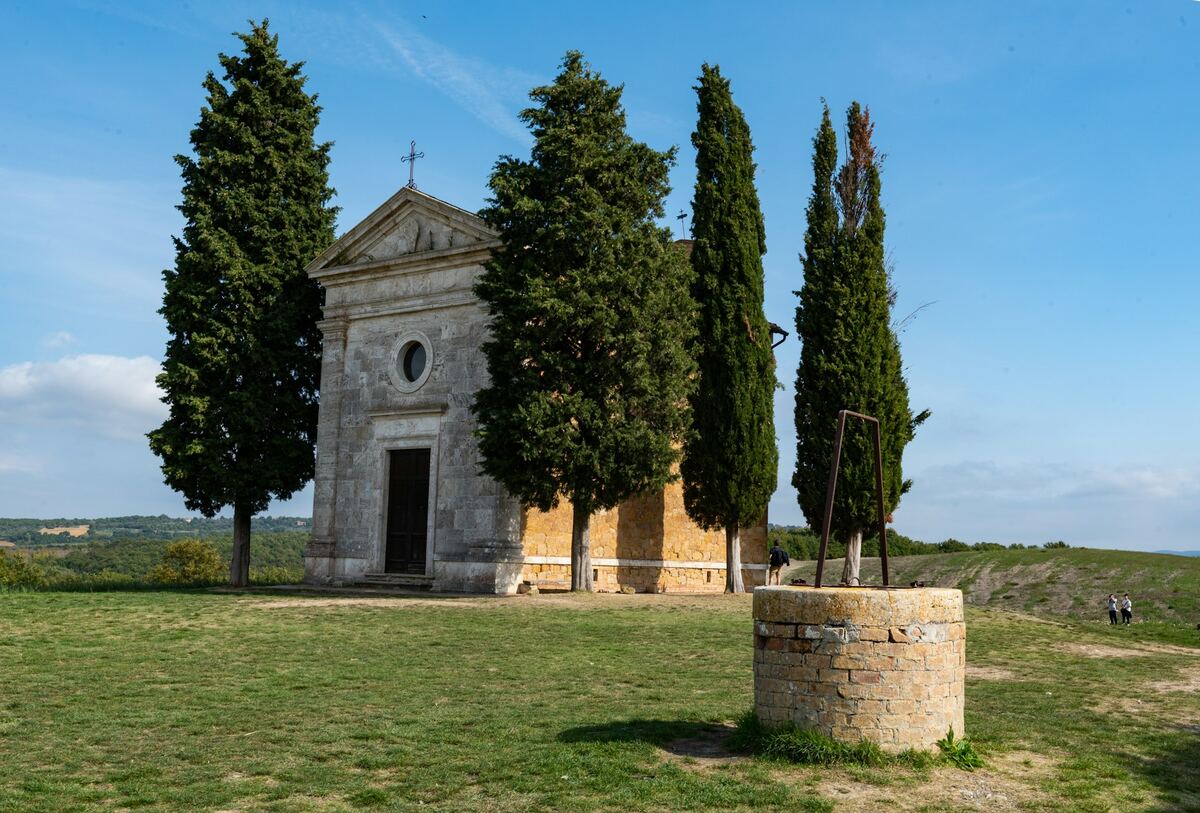
After returning to Pienza for lunch, continue west towards Cappella della Madonna di Vitaleta, one of the most photographed landmarks in Tuscany.
This tiny stone chapel, surrounded by cypress trees and rolling hills, looks almost too picturesque to be real. It's particularly beautiful in spring when the surrounding countryside is green, although the golden fields of summer have their own charm.
The chapel itself is small, so the real attraction is the surrounding landscape. Take your time enjoying the views and capturing a few photographs before continuing your Val d'Orcia road trip.
Time needed: Allow approximately 45-60 minutes, including walking and photographs.
Getting there: Follow the signs for Vitaleta from the SP146 between Pienza and San Quirico d'Orcia. Park in a permitted area and continue on foot. Depending on where you park, expect roughly 500 metres to 1 kilometre of walking each way.
Tip: Wear comfortable shoes. The paths are unpaved and can become muddy after rain. Don't assume you can drive directly to the chapel.
Stop 4: San Quirico d'Orcia (3:00-4:00 PM)
A short drive from the Chapel of Vitaleta brings you to San Quirico d'Orcia, a charming medieval village surrounded by ancient stone walls.
Start with a stroll along Via Dante Alighieri, the town's main street, where you'll find historic buildings, little shops, and cafés. Look out for the Collegiata dei Santi Quirico e Giulitta, a beautiful Romanesque church with intricately carved doorways.
The highlight, however, is Horti Leonini, a lovely Renaissance garden dating back to the 16th century. Its perfectly trimmed hedges, geometric flowerbeds, and peaceful atmosphere offer a welcome change from the rolling countryside you've spent the day exploring.
Time needed: Allow approximately 45-60 minutes to walk through the historic centre and gardens.
Parking tip: Park outside the historic centre and explore on foot. San Quirico has a restricted traffic zone (ZTL), so check road signs carefully before entering any of the old town's streets.
Worth visiting? Yes, particularly if you enjoy historic villages and gardens. However, if you're running behind schedule, this is one of the easier stops to shorten without sacrificing the day's most iconic scenery.
Stop 5: Bagno Vignoni (4:30-5:30 PM)
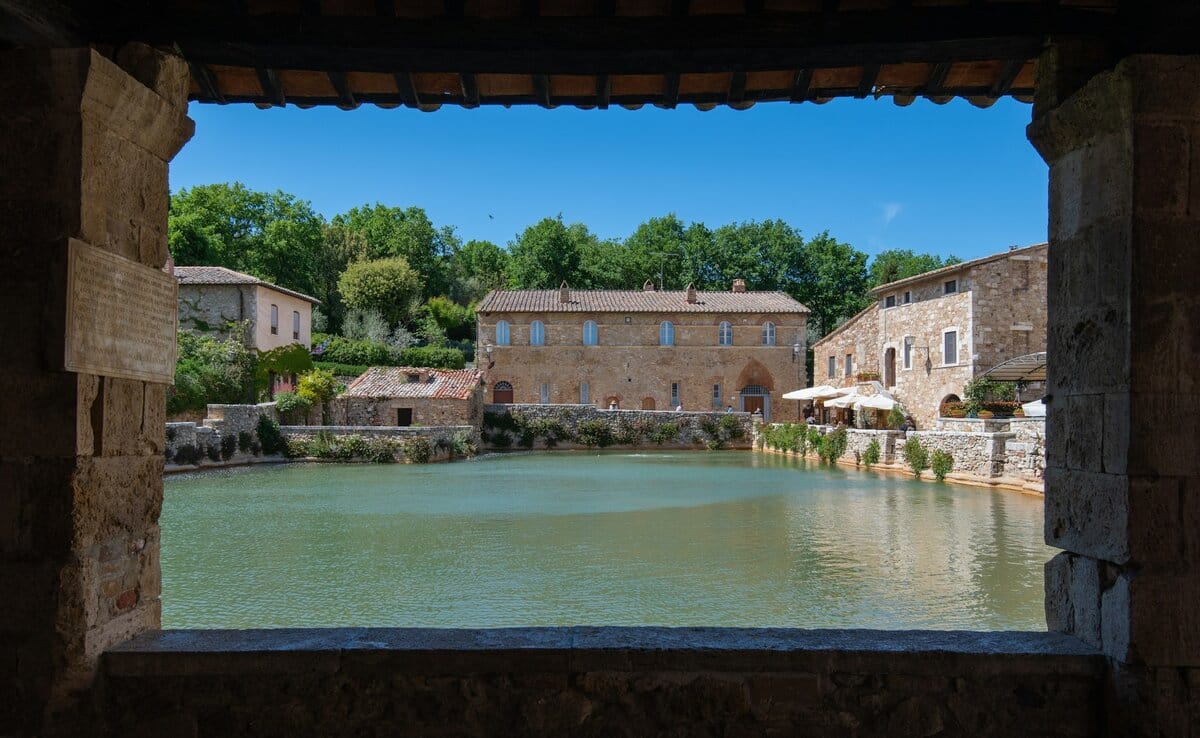
Finish your day in Val d'Orcia in Bagno Vignoni, a tiny medieval village with one rather unusual feature: instead of a traditional town square, there's an enormous pool of thermal spring water!
Known as Piazza delle Sorgenti, the pool has been at the heart of the village for centuries. Surrounded by historic stone buildings, it's a wonderfully atmospheric place to end your day, particularly when steam rises from the warm water.
Unfortunately, you can't swim in the famous pool. But you can wander around the square, admire the architecture, or settle down for a coffee before heading back.
If you have some extra time, consider walking down to Parco dei Mulini, where you can see the remains of historic watermills powered by the thermal springs.
Time needed: Around 30-60 minutes for the village and main square. Allow longer if you plan to explore the watermills.
Parking tip: Leave your car in one of the designated parking areas outside the pedestrian centre and explore on foot.
Worth visiting? Absolutely, if you have the time. It's quite different from the hilltop villages and countryside viewpoints you've seen throughout the day, making it a lovely final stop. If you're staying nearby, consider returning for dinner later in the evening.
What to Skip (and What to Add)
Val d'Orcia is full of beautiful towns, scenic roads, and hidden viewpoints. Unfortunately, there's only so much you can squeeze into one day without spending more time driving than exploring!
Short on time? I'd prioritize Pienza and the surrounding countryside, particularly the Chapel of Vitaleta. If you're a Gladiator fan, make time for Terrapille too. San Quirico d'Orcia would be my first stop to shorten if the day starts getting away from you.
Here are a few alternatives worth considering, depending on your interests.
Montepulciano
If you love medieval streets, Renaissance architecture, and Italian wine, Montepulciano is well worth visiting.
Located just outside Val d'Orcia, this beautiful hilltop town is famous for its Vino Nobile wine, historic cellars, and impressive Piazza Grande - it's absolutely worth making time for. However, properly exploring the town takes a couple of hours, so I wouldn't simply add it to an already busy day.
Montepulciano also appears in Under the Tuscan Sun, including scenes filmed around its historic streets and the Sanctuary of San Biagio. If you're a movie fan, you can explore the real filming locations from Under the Tuscan Sun in my dedicated guide.
My recommendation: If you'd like to check out Montepulciano on the same day, visit Montepulciano before Pienza, then skip San Quirico d'Orcia and Bagno Vignoni. You'll experience two beautiful Tuscan towns without rushing through everything.

Maximus's House: For Serious Gladiator Fans
Another Gladiator filming location is Podere Poggio Manzuoli, the farmhouse used as Maximus's home in the movie.
It's a beautiful property, with a long cypress-lined driveway that looks wonderful on camera. I've visited both this farmhouse and the Terrapille fields, and I'd definitely prioritize Terrapille if you only have time for one.
The farmhouse is private property, and when we approached, we received some rather questioning looks. Fair enough, really. It's someone's home, not a tourist attraction!
If you're curious about the other locations used in the movie, I've also explored where Gladiator was filmed around the world, including the locations used to recreate ancient Rome.
My recommendation: Save this one for serious Gladiator fans. The farmhouse and driveway can be admired from outside the property's gate, but don't enter the grounds or block access. Long lines of cypress trees are also something you'll see in several places around Val d'Orcia so don't feel this is the only place to find it!
Not Interested in Gladiator?
If you're not particularly interested in filming locations, you can skip the Terrapille walk and spend more time exploring Pienza instead.
One quieter spot I particularly enjoyed was Cimitero di Pienza, a small cemetery just outside the historic centre. It's a lovely place for a peaceful wander if you enjoy discovering less touristy corners of a destination. Just remember that it's an active cemetery, so be respectful of visitors and the graves.
Alternatively, enjoy a longer lunch, browse the local shops, or take your time admiring the countryside before continuing to the Chapel of Vitaleta.
(Sometimes the best thing to do in Tuscany is nothing in particular.)
Practical Tips
Do you need a car?
A car is the best way to explore Val d'Orcia in one day. Although buses connect some of the towns, public transport isn't particularly convenient for reaching the countryside viewpoints and smaller attractions.
The roads between Pienza, San Quirico d'Orcia, and Bagno Vignoni are scenic, so the drives are part of the experience. Just remember that narrow country roads aren't always suitable for stopping whenever you spot a beautiful view!
Parking and Restricted Traffic Zones (ZTLs)
Many Tuscan towns have Zona a Traffico Limitato (ZTL) restrictions that prevent unauthorized vehicles from entering their historic centres.
Park in designated areas outside the old towns and explore on foot. Don't blindly follow Google Maps into a restricted street, as fines can be issued automatically by cameras.
Keep some flexibility in your schedule for finding parking, particularly during busy weekends and summer.
For more advice on driving, restricted traffic zones, and other common mistakes, check out my practical Tuscany travel tips for first-time visitors.

Can you Visit Val d'Orcia on a Day Trip from Florence?
Yes, but it'll be a long day! Allow approximately 1.5-2 hours to drive from Florence to Pienza, depending on your route and traffic. With the return journey, that's several hours of driving before accounting for sightseeing.
If you're starting from Florence, leave early and consider skipping one or two stops. Alternatively, spend a night in southern Tuscany to explore at a more relaxed pace.
If you're planning a longer holiday, my realistic 7-day Tuscany road trip itinerary connects Florence, Chianti, and Val d'Orcia without rushing between destinations.
When is the Best Time to Visit Val d'Orcia?
Val d'Orcia is beautiful throughout the year, but the scenery changes considerably with the seasons.
- Spring: Lush green hills, wildflowers, and generally comfortable temperatures.
- Summer: Golden fields and long daylight hours, although afternoons can be very hot.
- Autumn: Harvest season, softer colours, and often pleasant sightseeing weather (but expect more bugs around the harvest areas).
- Winter: Fewer visitors and atmospheric scenery, but shorter daylight hours and potentially muddy walking paths.
For this particular itinerary, I'd favour spring or early autumn, when the weather is generally more comfortable for walking and exploring. We visited in early September, and I thought the weather and scenery were fantastic. It's definitely a time of year I'd recommend.
If you're visiting in winter, start early and consider shortening the itinerary so you're not reaching the final stops after dark.

Frequently Asked Questions
One day is enough to experience some of Val d'Orcia's most beautiful towns, countryside, and viewpoints. However, if you want to explore more villages, visit wineries, or enjoy longer countryside walks, I'd recommend spending two or three days in the region.
Val d'Orcia is a scenic region in southern Tuscany, within the province of Siena. Its UNESCO-listed cultural landscape includes towns such as Pienza, San Quirico d'Orcia, and Montalcino. It's famous for its rolling hills, cypress-lined roads, historic villages, and beautiful countryside.
You generally don't need reservations to explore Val d'Orcia's historic town centres or enjoy its public viewpoints. However, if you're planning wine tastings, guided tours, or meals at popular restaurants, booking ahead is a good idea, particularly during summer and on weekends.
Should You Visit Val d'Orcia for One Day
Val d'Orcia is one of those places that somehow manages to look even more beautiful in person than it does in photographs. Between its charming villages, rolling hills, and ridiculously picturesque countryside, it's easy to see why.
This one-day Val d'Orcia itinerary will give you a wonderful introduction to the region, but don't worry if you can't fit everything in. Sometimes the best memories come from unexpected stops along the way.
And besides, there's always a good excuse to return to Tuscany!
It's a big world, but we're never too far away! SIGN UP for the Travel & Chai newsletter, and follow Travel & Chai on Instagram and Pinterest to keep in touch.


Leave a Reply